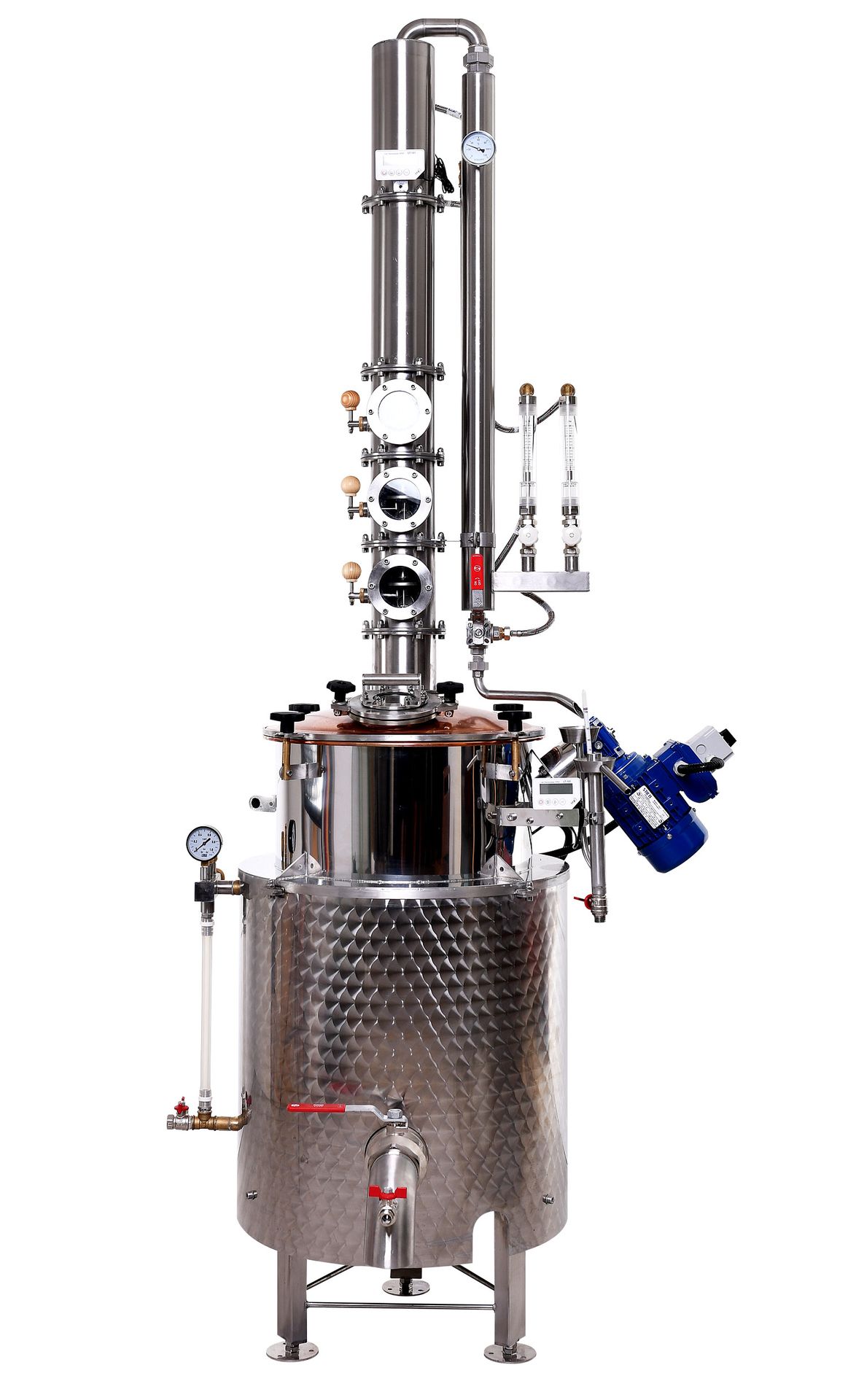
TOTEM
95L
UNIVERSAL DOUBLE-WALLED COLUMN STILL
PRECISION ENGINEERING, VERSATILE APPLICATION, FAST OPERATION, COST-EFFECTIVENESS, EASE OF USE, PROFESSIONAL QUALITY
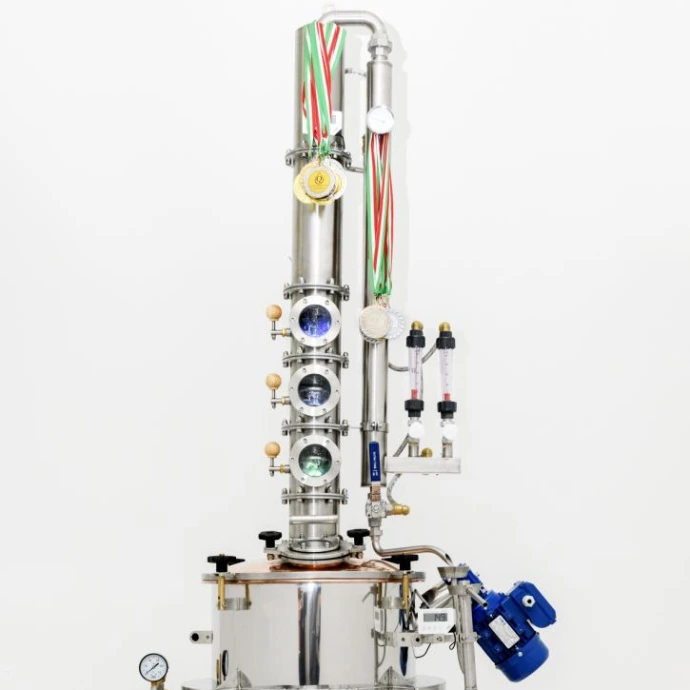
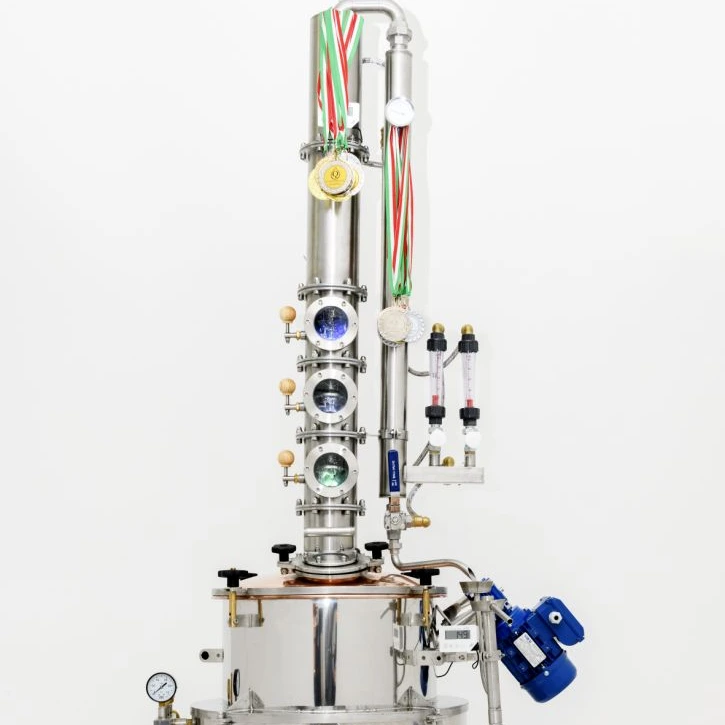
TOTEM is our standard floor-standing column still. It produces high-proof distillate in a single run. Thanks to this technology and precise process control, the result is a clean, aromatic distillate. It is ideal for home use and as an entry-level model for micro-distilleries.
Technical Specifications
CAPACITY
95 litres
NET CAPACITY
min. 30 litres / max. 80 litres
DIMENSIONS
Height: 234 cm, Length: 100 cm
WEIGHT
100 kg
MATERIAL
Stainless steel 1.5 mm, Copper 2 mm
AVERAGE DISTILLATION TIME
2 hours
HEATING METHOD
Gas / Electric
AVERAGE ABV
80–85% (max. 92%)
DISTILLATES THAT CAN BE PRODUCED
Brandy, Gin, Whiskey
ELECTRICAL REQUIREMENTS
9 kW, three-phase 380 V (3 × 16 A) / 12 kW, three-phase 380 V (3 × 20 A)
Technical Specifications
CAPACITY
95 liters
NET CAPACITY
min. 30 litres / max. 80 litres
DIMENSIONS
Height: 234 cm, Length: 100 cm
WEIGHT
100 kg
MATERIAL
Stainless steel 1.5 mm, Copper 2 mm
AVERAGE DISTILLATION TIME
2 hours
HEATING METHOD
Gas / Electric
AVERAGE ABV
80–85% (max. 92%)
DISTILLATES THAT CAN BE PRODUCED
Brandy, Gin, Whiskey
ELECTRICAL REQUIREMENTS
9 kW, three-phase 380 V (3 × 16 A) / 12 kW, three-phase 380 V (3 × 20 A)
Key Features
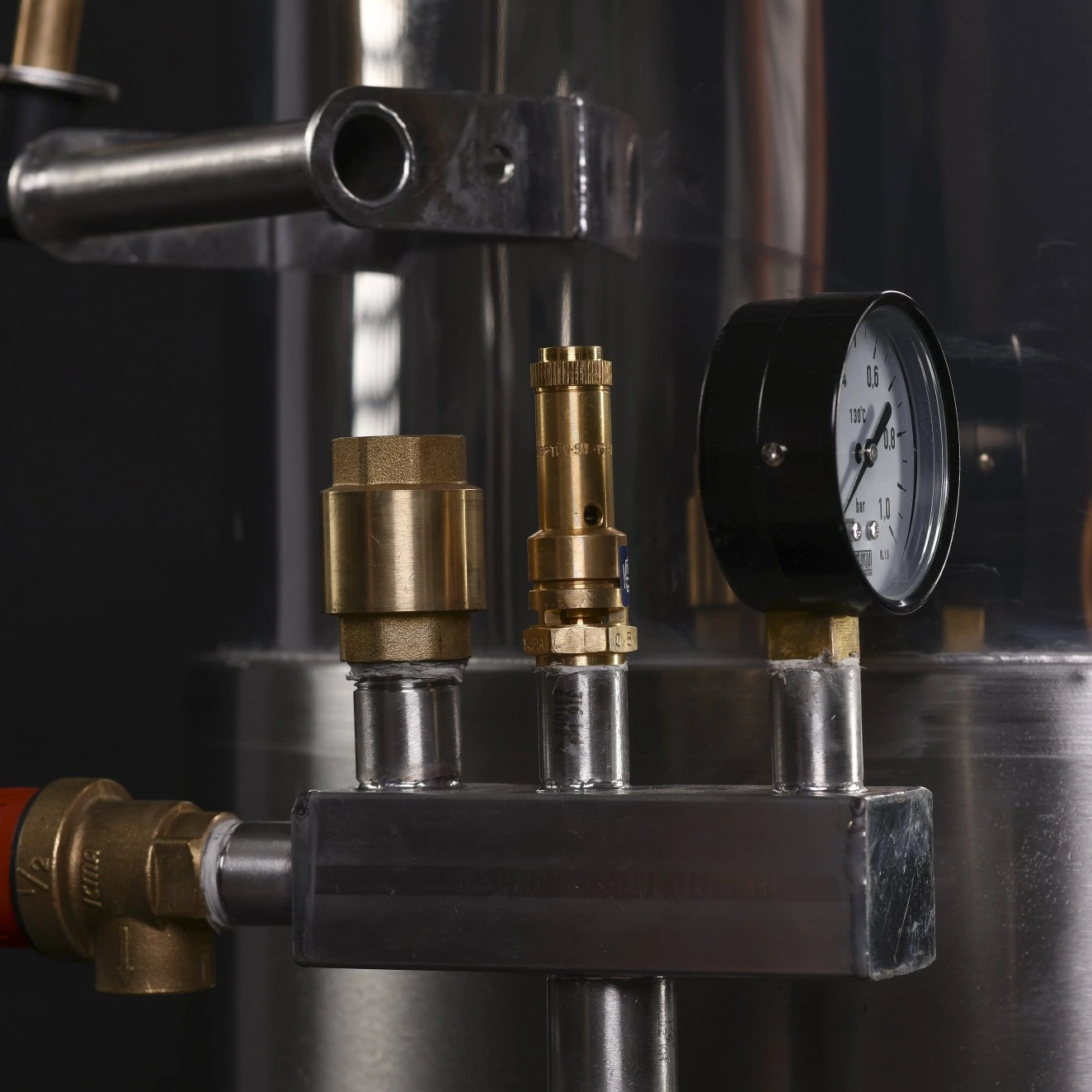
DOUBLE-WALLED, WATER-JACKETED KETTLE
The Bain-Marie system, also known as a water-jacketed, double-walled (water-bath) kettle, is one of the best and safest methods of heating the mash. The pressure inside the water jacket can be increased to a maximum of 0.5 bar using a spring-loaded safety and pressure-regulating valve. At this pressure, the boiling point of water reaches 110°C. As a result, the temperature of the inner kettle in direct contact with the mash can reach up to 110°C without scorching the mash. By the end of the distillation process, the mash temperature can be raised to approximately 100°C. Heat transfer takes place indirectly, and the bottom of the kettle has a curved design.
Material:
High-alloy, chromium-nickel stainless steel of food-grade quality, grade AISI 304 / KO33 / W. Nr. 1.4301.
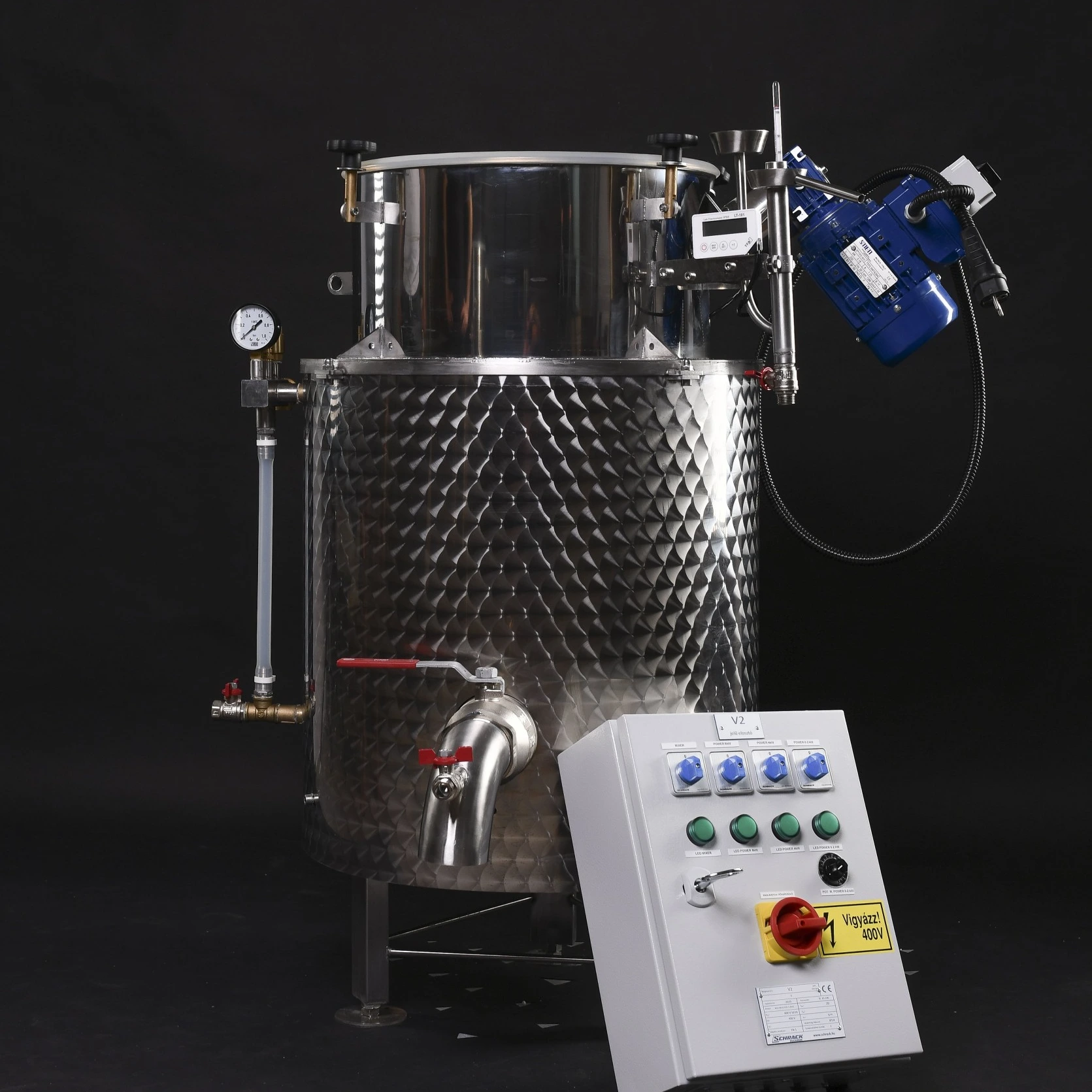
HEATING ELEMENTS AND ELECTRICAL SWITCHBOX
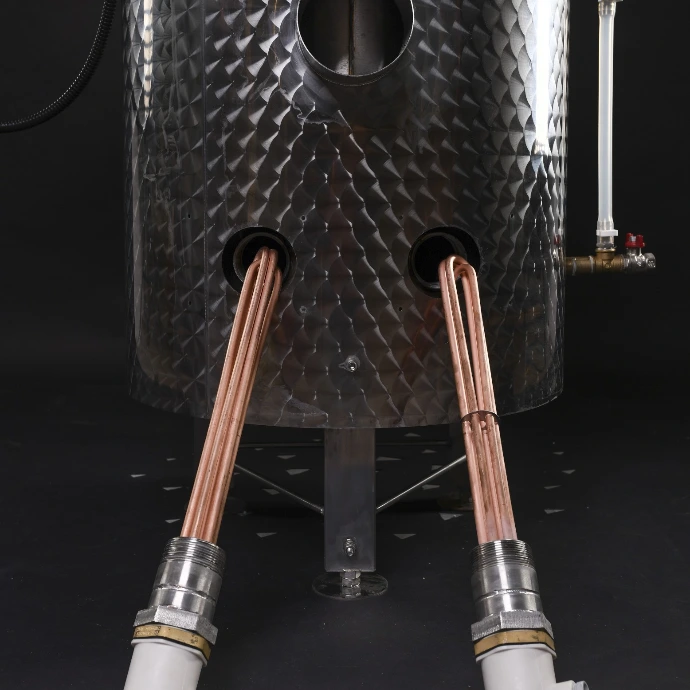
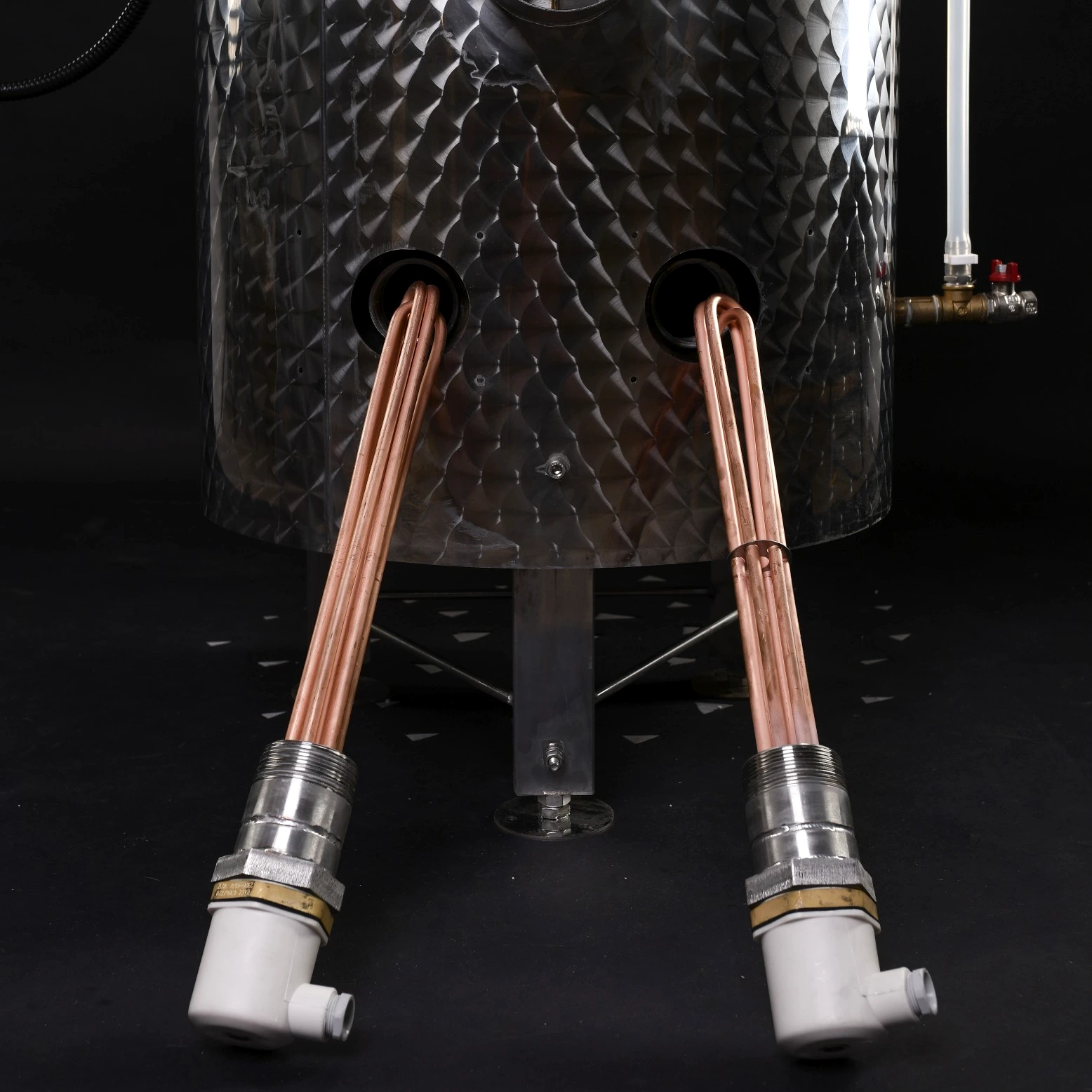
Two copper-plated electric heating elements, each rated at 4.5 or 6 kW, are immersed directly in the water jacket. This allows the water jacket to heat up considerably faster, bringing the mash to boiling point sooner than in other systems.
The heating elements can be precisely controlled via the electrical control cabinet. The heating circuit of one of the heating elements is divided into three separate circuits, each of which can be switched independently on the control cabinet. In addition, a potentiometer allows fine adjustment of the heating output between 0 and 2 kW.
Precise heat control is essential for maintaining column equilibrium throughout the entire distillation process.
The electrical control cabinet is included with the PK95L unit.
Heating options:
12 kW (3 × 20 A), 380 V — approximately 40 minutes to reach boiling point with 80 litres of mash.
9 kW (3 × 16 A), 380 V — approximately 70 minutes to reach boiling point with 80 litres of mash.
A three-phase power supply is required!
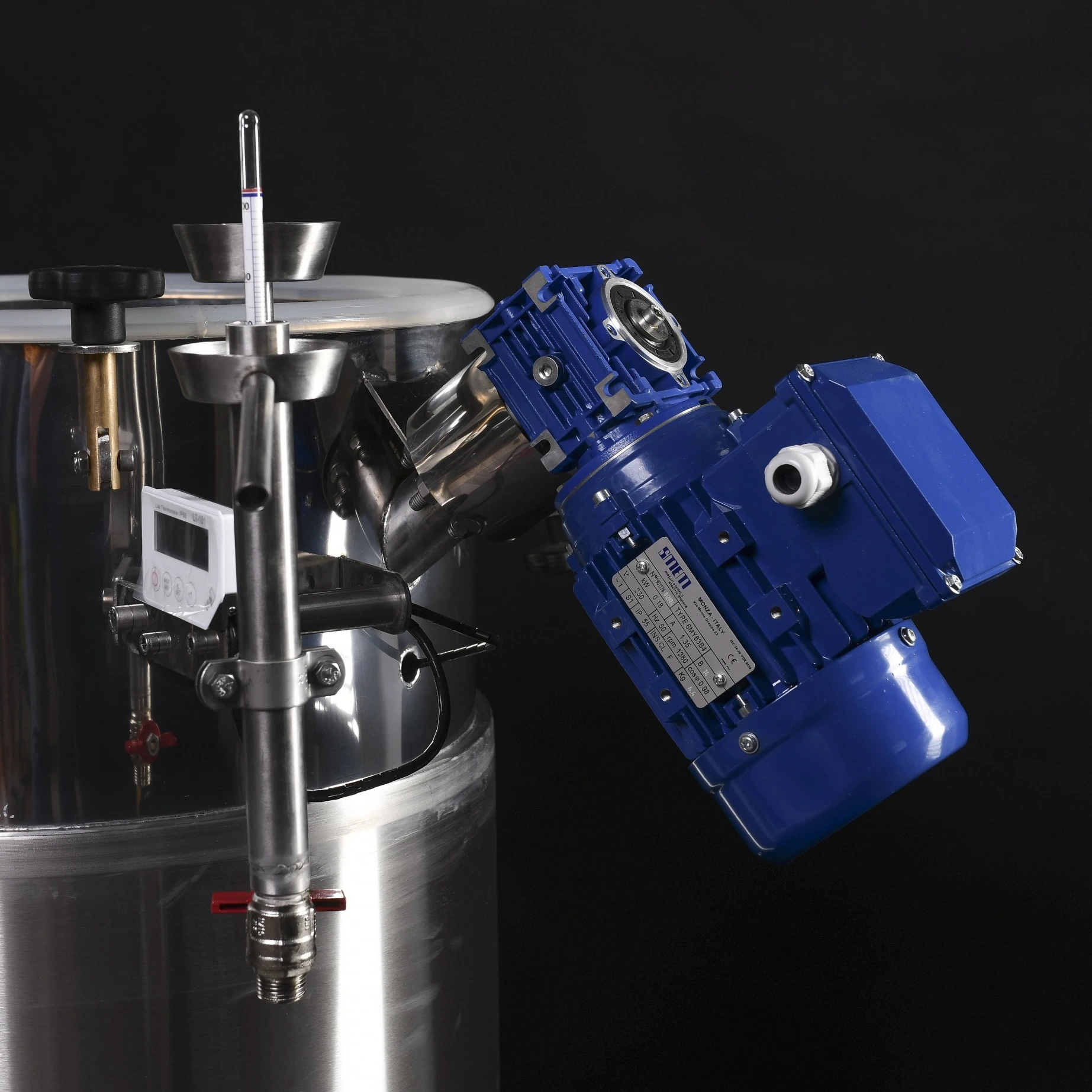
MIXER
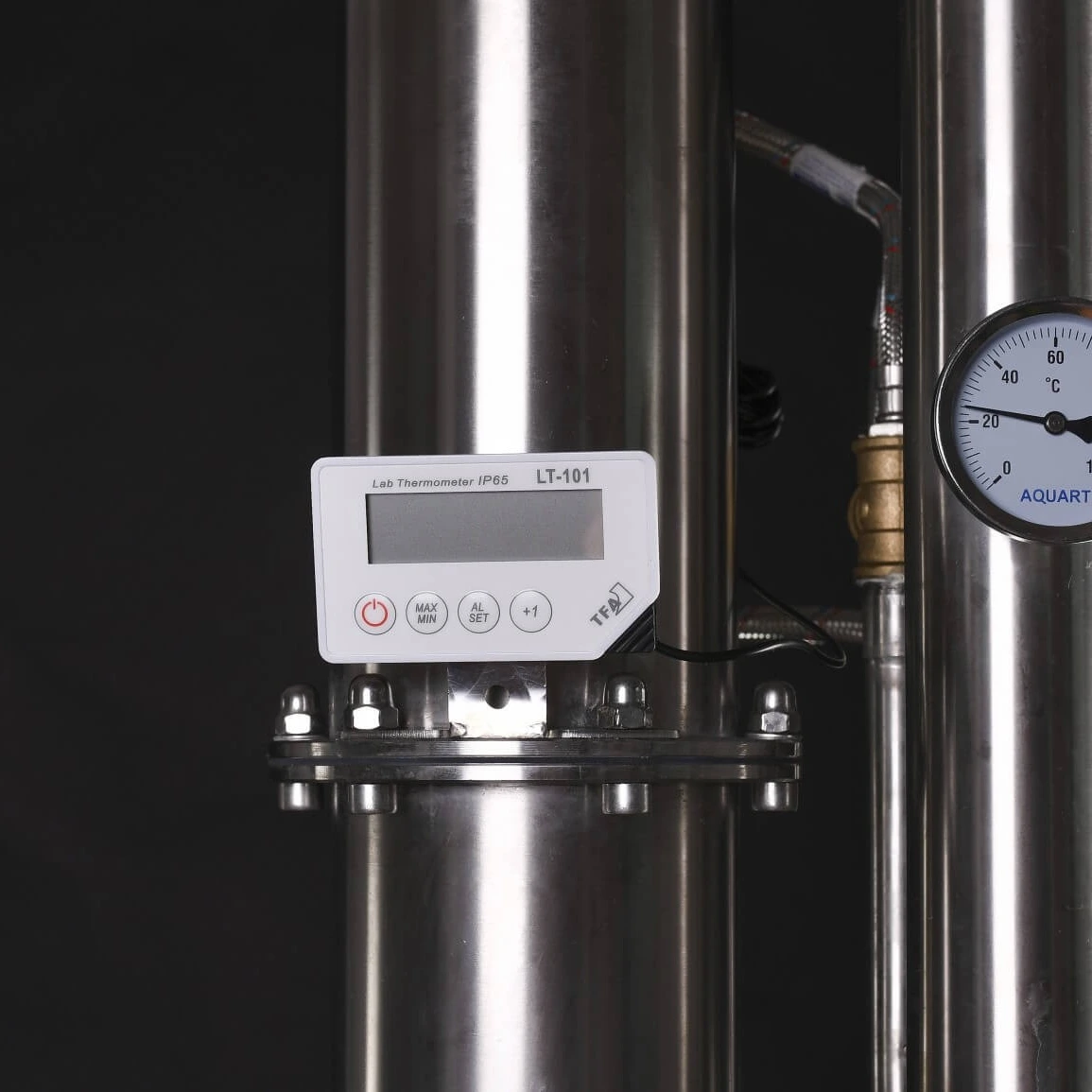
DIGITAL THERMOMETERS
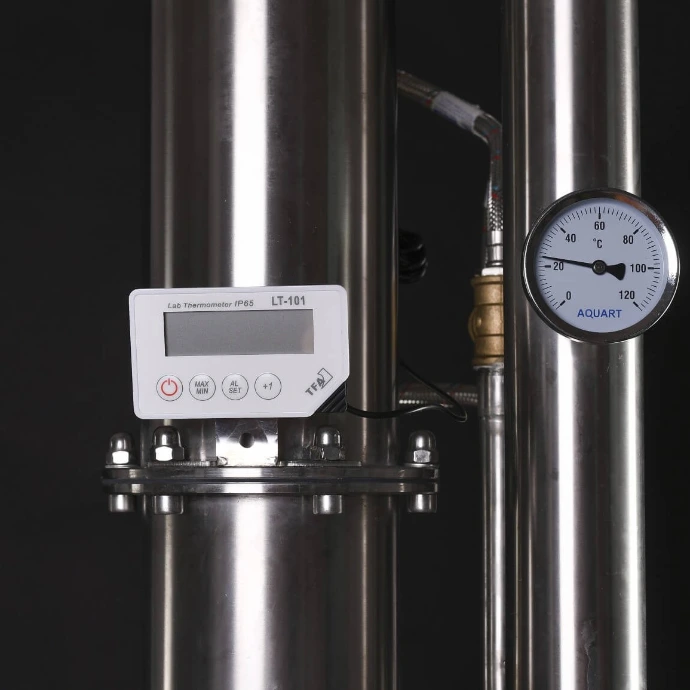
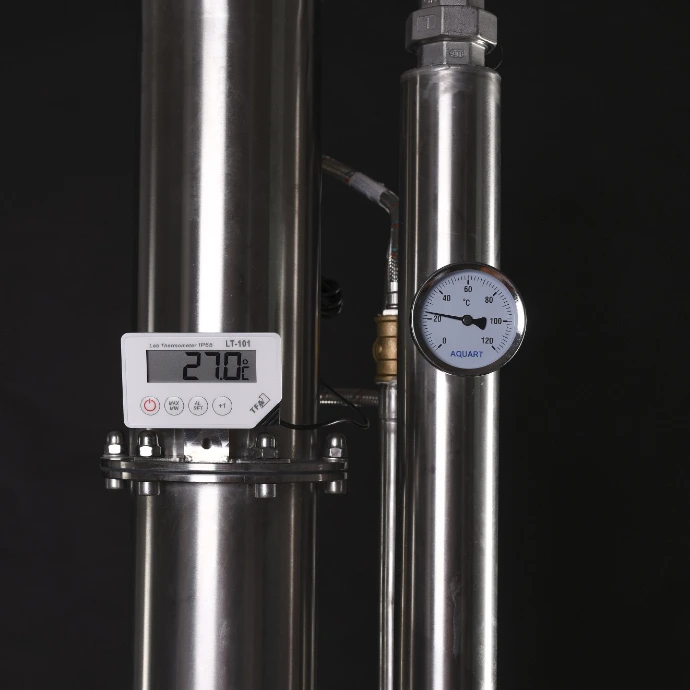
We use digital thermometers with 0.1°C resolution to measure the temperature of the mash and the dephlegmator, as even a tenth-of-a-degree difference can significantly affect the flavour of the final product. The product condenser is equipped with an analogue thermometer, as the cooling water temperature needs to be maintained within a range of approximately 20°C.
Mash thermometer:
The sensor extends directly into the inner kettle, allowing the temperature rise of the mash to be monitored precisely during the heating phase, as well as the approach of the boiling point.
Dephlegmator thermometer:
Continuously monitoring the temperature of the outgoing vapour is essential for precise dephlegmator control and, consequently, for achieving the best possible flavour in the final product.
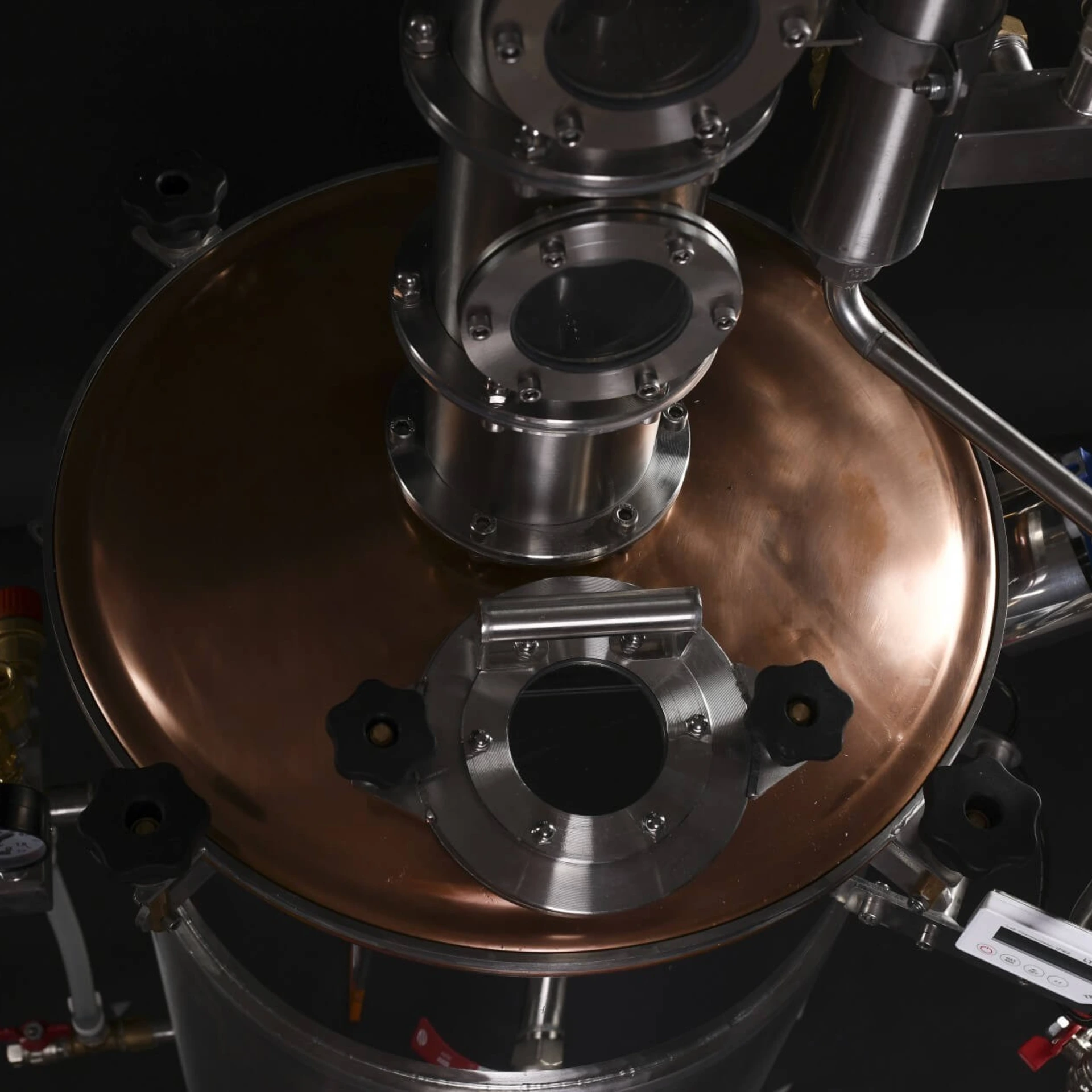
COPPER COUPOLA AND LOADING DOOR
Copper cupola:
2 mm deoxidized copper, copper content higher than 99.90%.
Food grade silicone is applied to the rim of the kettle to ensure a perfect seal between the cupola and the kettle.
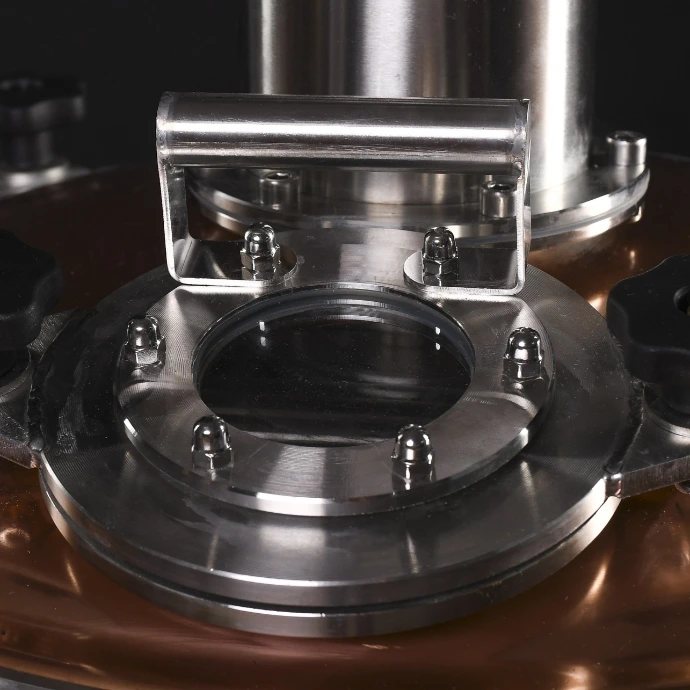
Loading door with sight glass:
The mash is loaded through the door with the inox loading funnel. It is also possible to clean the kettle through the loading door with a hose. With the help of the sight glass, we can see what is happening in the kettle. Loading door diameter: 120 mm
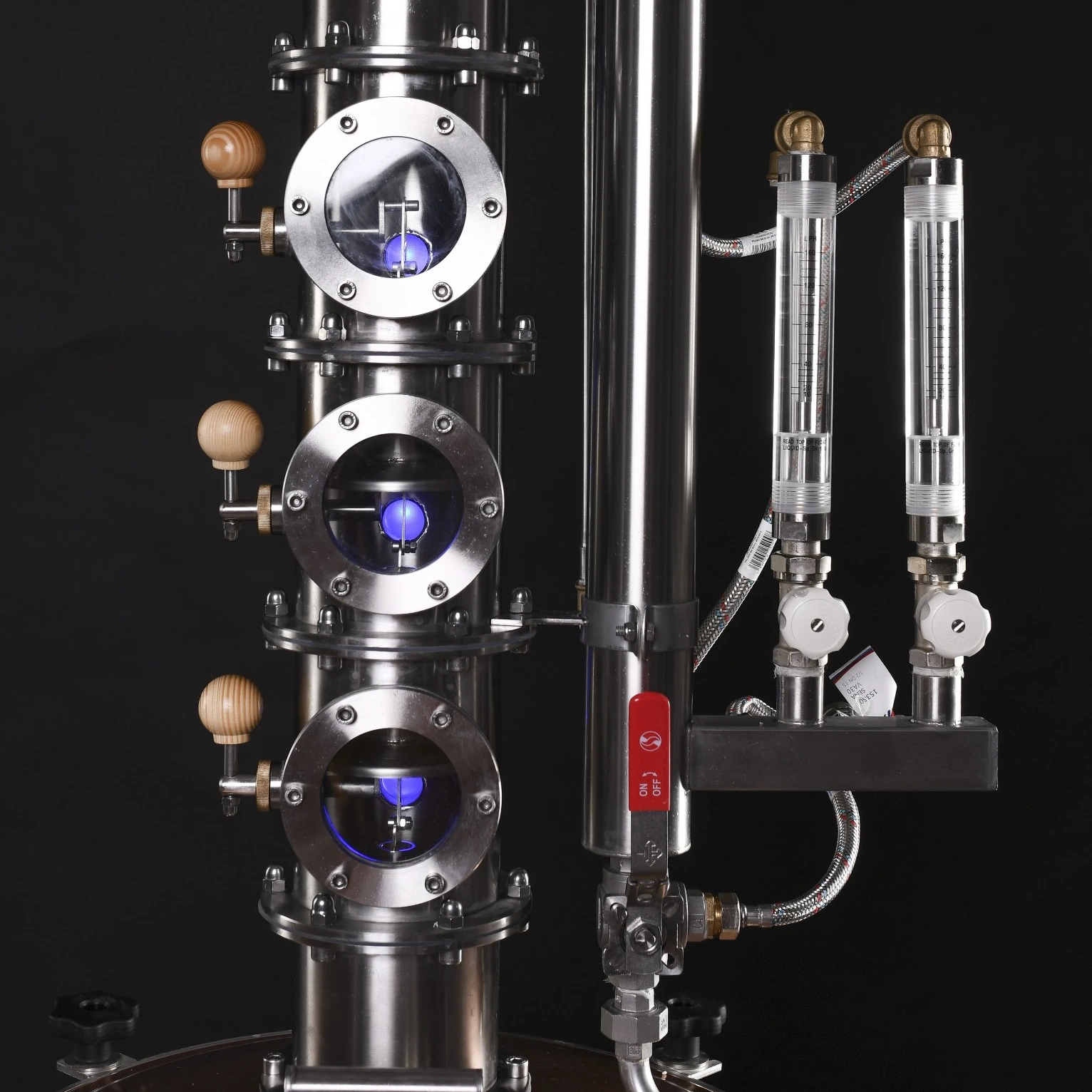
COLUMN
Column diameter: 114 mm
Disassembled column parts: The entire column can be disassembled and cleaned.
Modular flange connections: The individual column parts are held together by rings (flanges) which are fastened with 5 mm thick bolts.
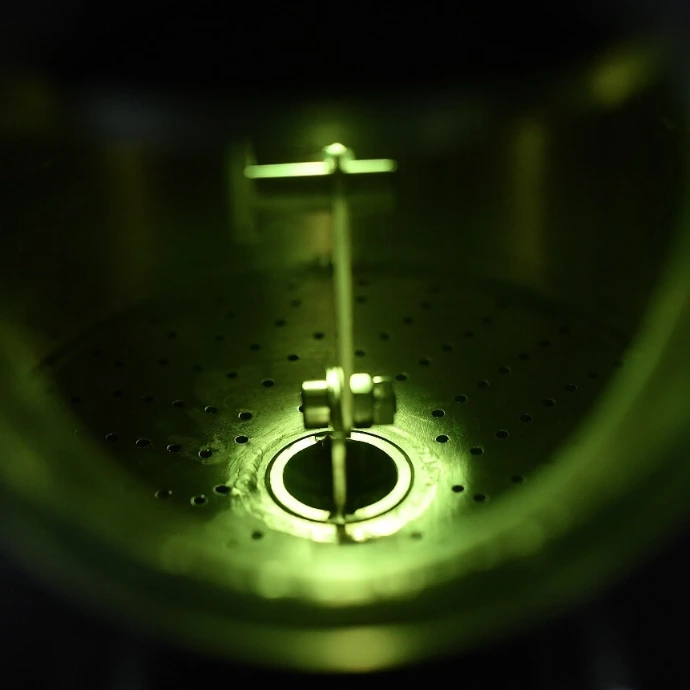
Plate column section: Consists of a suitably spaced plate and an overflow. The overflow ensures the maximum height of the liquid level on the plate. We can check the liquid level. The higher the liquid level, the more concentrated the distillate. By lowering the liquid level or turning off a plate, the “heavier” aroma components can flow more easily into the distillate.
Led lights: For easier sight in the column sections led lights are mounted on the back of the column. Colour of the led lights are adjustable by a remote control.
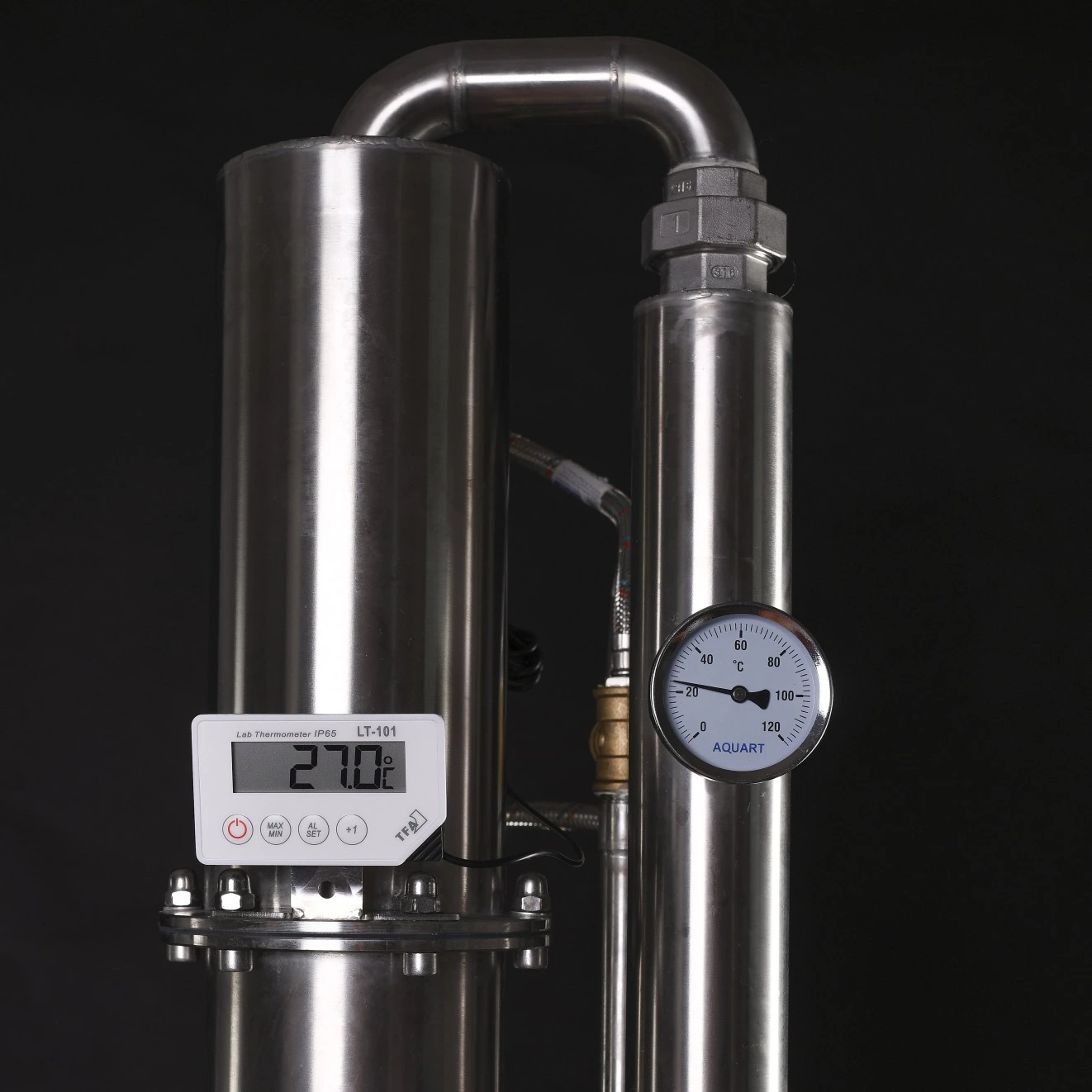
DEPHLEGMATOR
Tubular dephlegmator:
A partial condenser that ensures an appropriate proportion of the vapour rising through the column condenses back into liquid (reflux). The dephlegmator contains nine tubes through which the alcohol vapour passes. Its capacity is sufficient for complete rectification in the column, even at maximum heating output.
Column section with or without copper packing:
A column section located above the rectifying trays contains 330 copper rings. In some countries, the use of copper packing in column stills is not permitted, so a version without copper packing is also available.
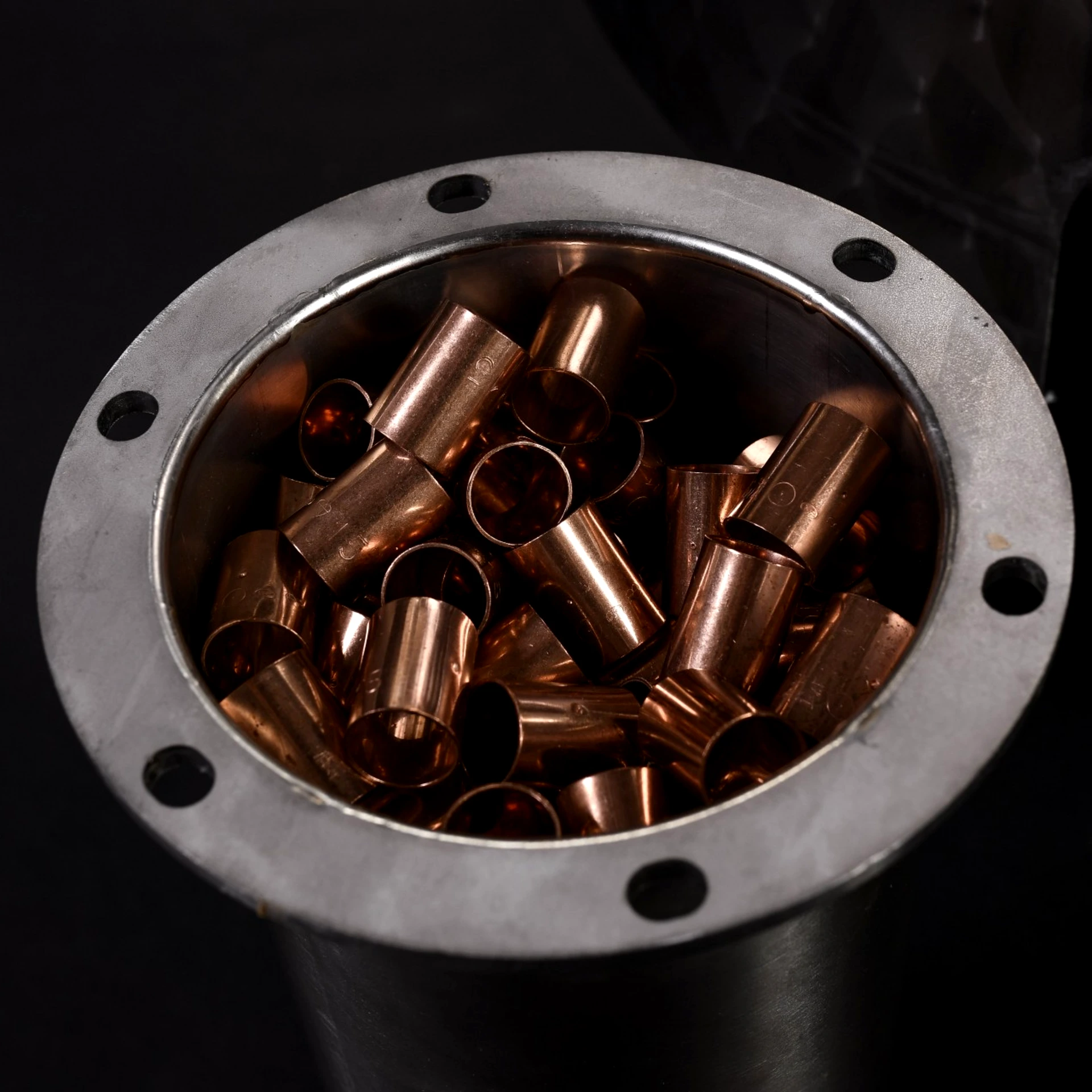
CATALYSATOR
The catalysator is a column section under the dephlegmator which contains 330 copper rings to ensure the refinement chemical reaction with the alcohol vapour of the fruit and grain distillates. Chemical reaction with copper molecules highlights the distillates aroma and taste characteristics.
The overall surface of the 330 copper rings is the same as the inner surface of the column, so we achieve the same catalysation effect as we would have the whole column from copper. Their advance is that they are easily cleanable by dismounting the Catalysator.
Copper is a must in fruit and grain distillation!
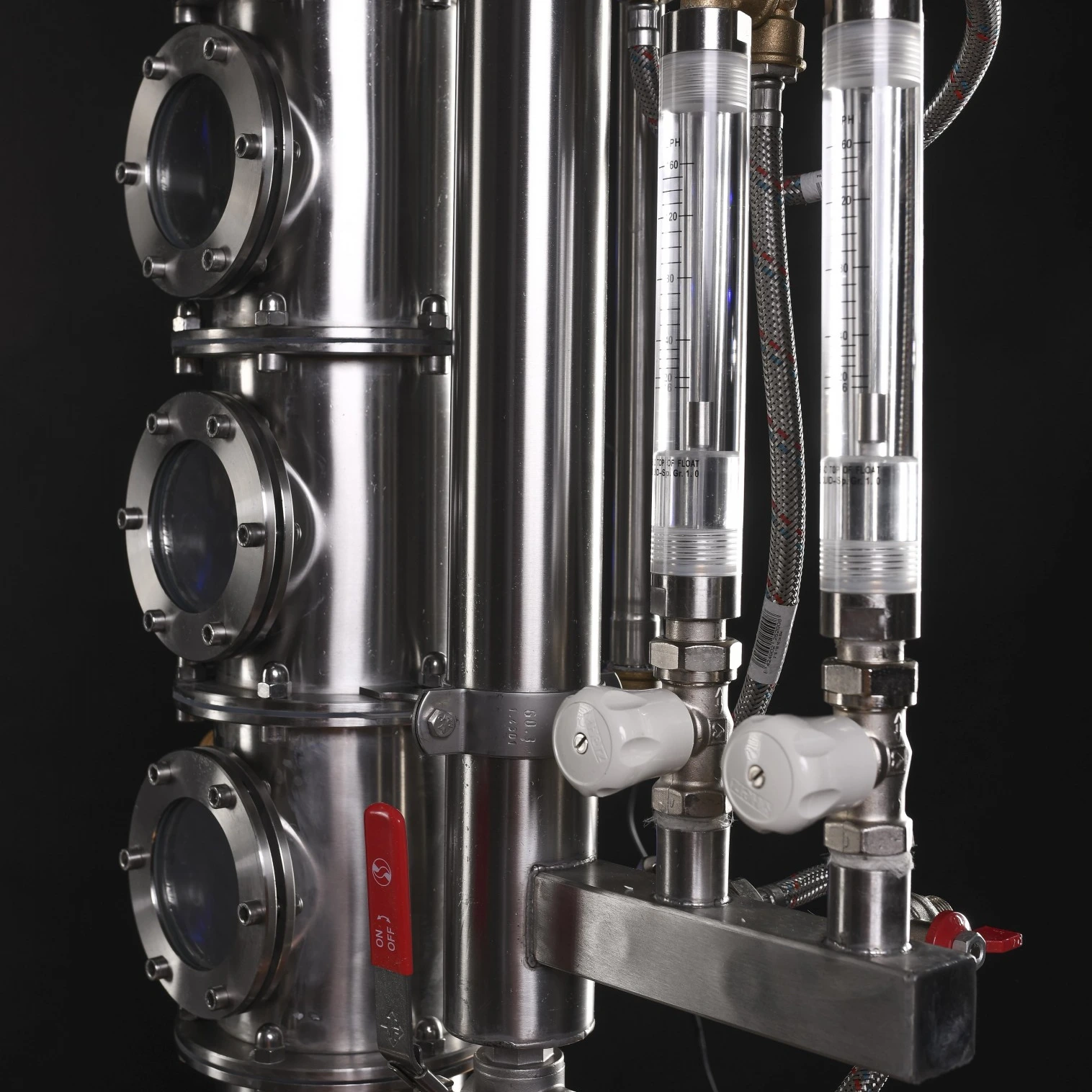
END COOLER
The high-alcohol vapor exiting the dephlegmator enters the tubular condenser. The distillate vapor condenses in the top third of the end condenser and then cools through the surface of the tube bundle.
Despite its slim form, its maximum cooling performance exceeds the necessary cooling demand.
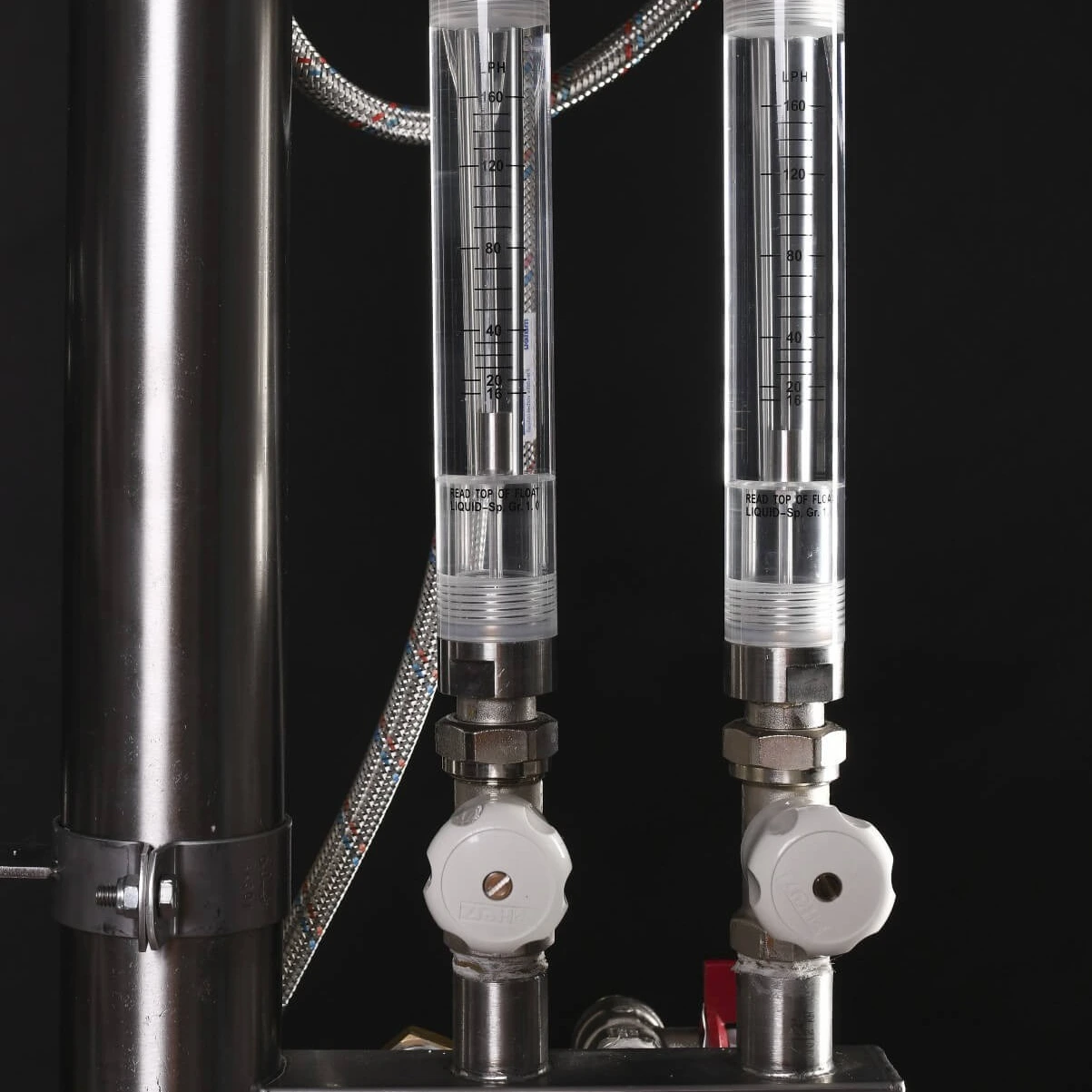
ROTAMETERS
Control valves:
HERZ manual straight valves regulate the water flow to the product condenser, the Pistorius apparatus and the dephlegmator.
Flow meters (rotameters):
Precise control of water flow is one of the most important factors in ensuring proper column operation. The metal float inside each rotameter rises when the valve is opened and falls when it is closed. The current water flow rate can be read from the scale in litres per hour.
The 95-litre distilling still is equipped with three flow meters:
Dephlegmator flow meter
Product condenser flow meter
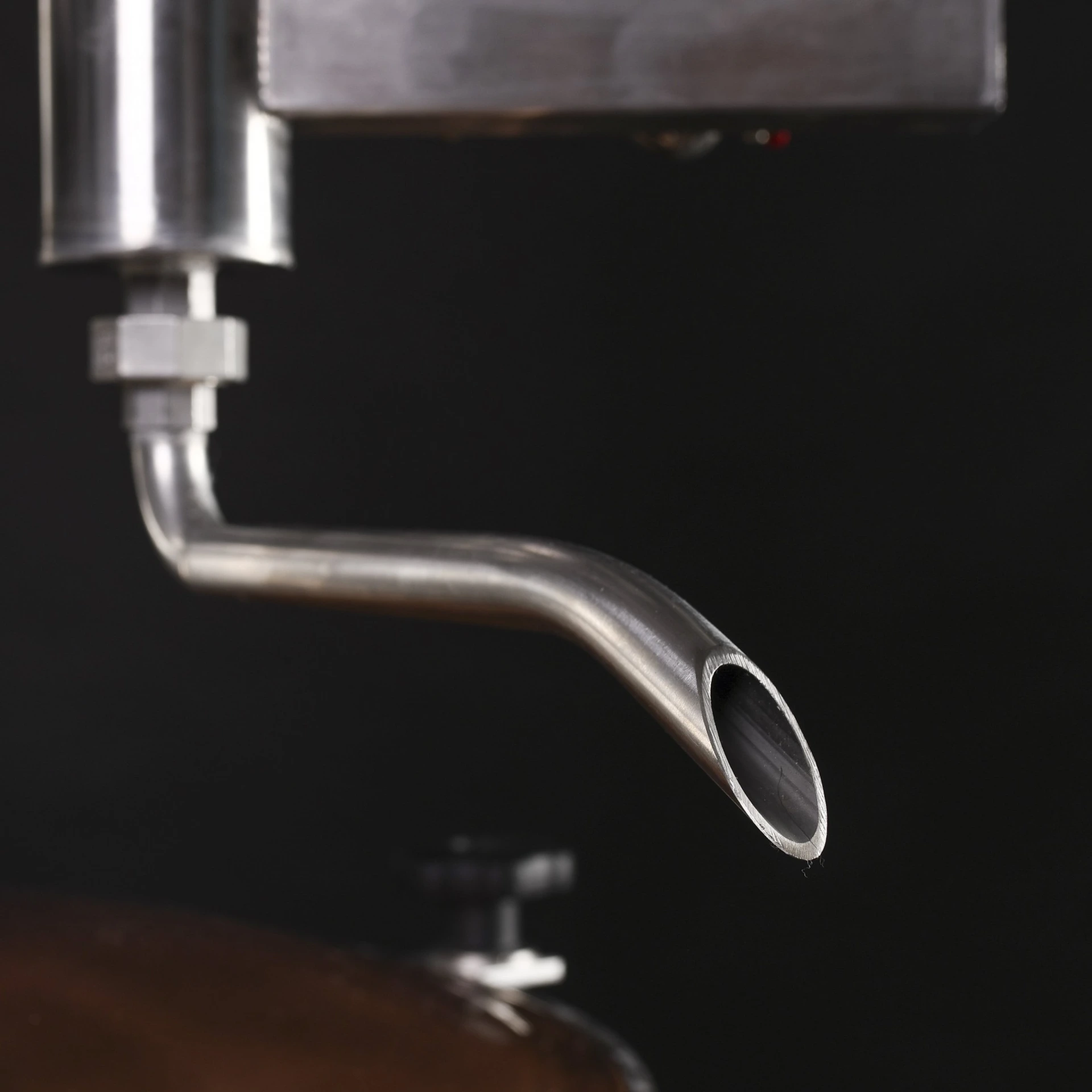
PARROT BEAK
This device, also known as an alcohol parrot, allows the alcohol content of the distillate flowing out of the still to be measured continuously throughout the distillation process.
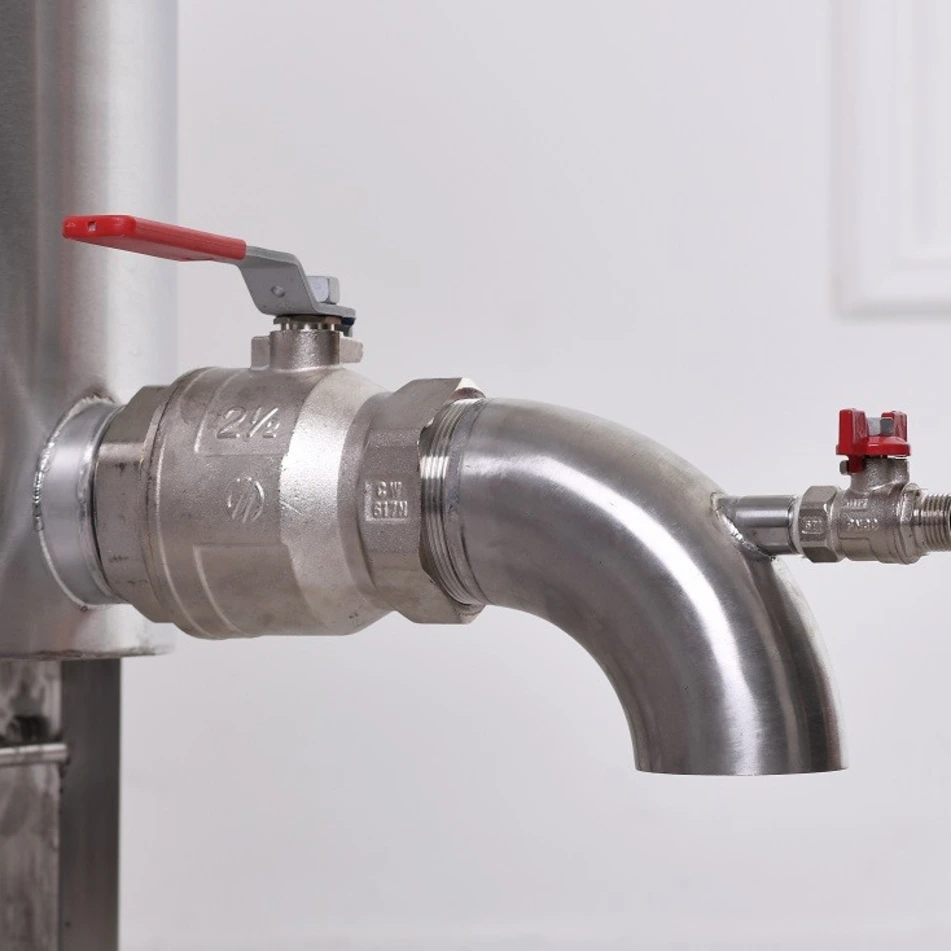
DRAIN VALVE
Safe draining:
The outlet, angled at 90 degrees, plays an important safety role by preventing hot mash from discharging in a horizontal stream when the ball valve is opened.
Backwashing function:
Rinsing and cooling water can be connected to the outlet via a ½-inch ball valve, allowing the system to be cleaned effectively.
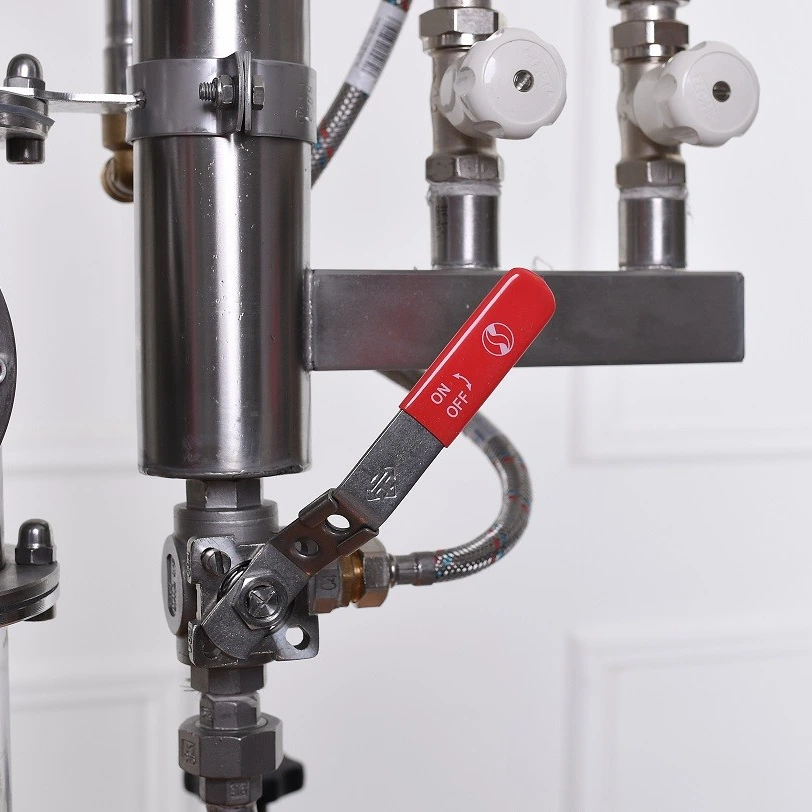
BACKWASHING TAP
Backwashing is a convenient way to keep the column and the boiler clean. The rinsing water washes out the residue from the previous distillation from inside the column, which cannot mix with the first part of the next distillation.
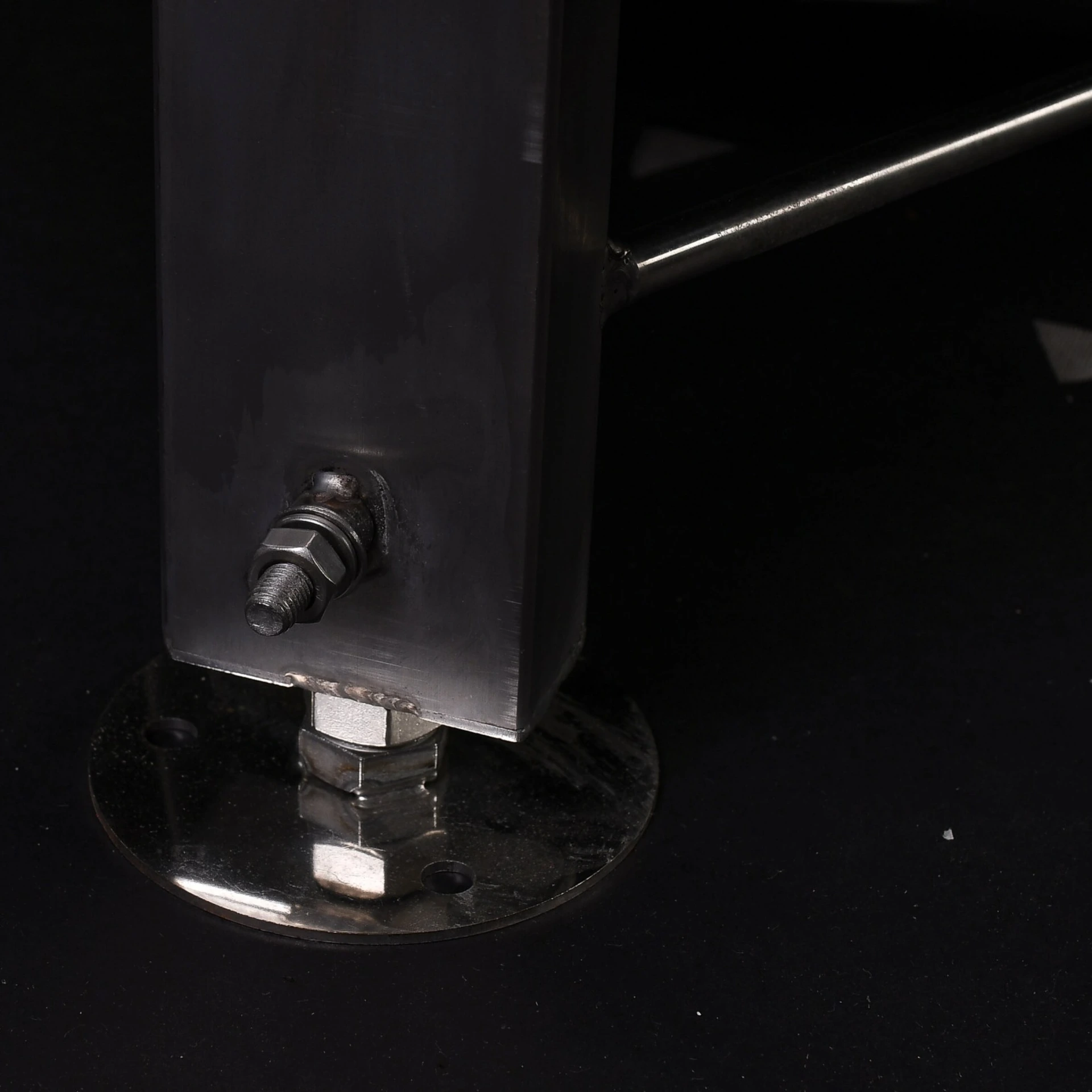
LEGS
The welded stainless steel legs are made from robust closed-section profiles and solid round steel bars, ensuring the stability of the 95-litre distilling still.
The legs can be shortened if the room does not have sufficient ceiling height. The equipment stands 234 cm tall. We generally recommend maintaining a clearance of at least 5 cm between the equipment and the ceiling. If the equipment is too tall, the legs can be shortened by 15 cm, reducing the overall height to 219 cm.
(Shortening the legs does not incur any additional cost.)
Distillation video with Totem 95l Column still
If you would like to see what you can expect before attending, we invite you to watch our video demonstrating the TOTEM 95L in operation.
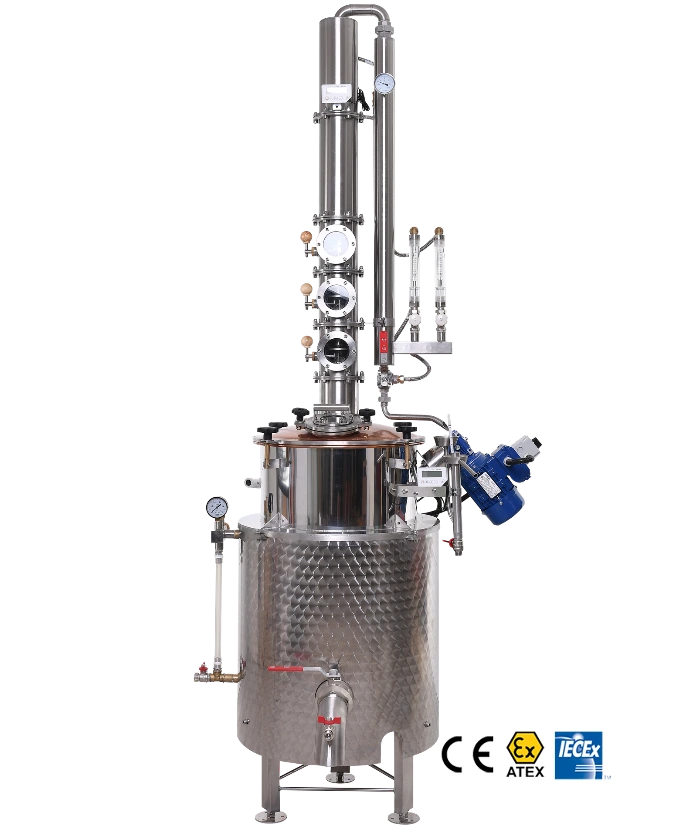
DETAILED TOTEM OVERVIEW
Technical Information
Operating Principle and Design Advantages of Our Double-Walled Pálinka Distilling Kettle
Safe and Scorch-Proof
The double-walled, water-jacketed kettle is considered one of the best methods for preventing mash from scorching during pálinka production.
The pressure inside the water jacket can be increased to a maximum of 0.5 bar using a spring-loaded safety and pressure-regulating valve.
At a pressure of 0.5 bar, the boiling point of water reaches approximately 110°C. Consequently, the temperature of the inner kettle wall in contact with the mash can also reach a maximum of approximately 110°C.
At this temperature, fruit mash cannot scorch inside the kettle. The mash temperature can rise to approximately 100°C. Heat transfer is gentle and indirect.
Even thick, Szatmár-style plum preserve will not scorch inside the kettle.
Fast and Versatile
For optimal column operation, the double-walled distilling kettle features a reduced water volume and a short response time, enabling precise control of the heat input.
The reduced water volume has low thermal inertia and responds quickly to changes in heating output.
Thanks to its versatility, the kettle is also suitable for brewing beer, preparing grain mash and cooking jam.
Structurally Robust and Scorch-Proof
To ensure that the bottom of the kettle—the area subject to the greatest structural stress—reliably withstands the pressure inside the water jacket, we use a shallow-domed kettle bottom with a central drain. This prevents deformation and twisting that could not be fully eliminated over the long term in a flat-bottomed design, even with additional reinforcement, due to the pressure acting from within. A distinctive feature of the kettle is its TÜV-certified safety relief valve, which reliably releases excess pressure from the water jacket without manual intervention, in accordance with applicable standards and regulations.
Since the temperature of the water and the equilibrium steam above it inside the water jacket cannot exceed approximately 110°C at a pressure of 0.5 bar, products such as fruit mash, jam ingredients and grain mash will not scorch, even under intensive heating.
Kettle Specifications
Material: AISI 304 / KO33 / W. Nr. 1.4301, high-alloy chromium-nickel steel, food-grade stainless steel
Material composition:
So-called 10/18 stainless steel derives its name from its high chromium and nickel content. These high levels of chromium and nickel give the material its distinctive properties: it resists acids found in food, is corrosion-resistant and can be polished to a mirror finish. Stainless steel is exceptionally robust but requires extensive processing and specialised welding techniques.

Sheet thickness: Inner kettle: 2 mm; outer kettle: 1.5 mm; bottom plates: 2 mm
Gross capacity: 95 litres
Filling capacity: 80 litres
Scorch protection: Double-walled kettle operating at low pressure (0.5 bar)
Heat-transfer medium inside the water jacket: Water; during operation: water and water vapour
Reduced-volume water jacket:
The design prioritises rapid heating of the distilling kettle and optimal configuration of the heat-transfer surfaces. This enables dynamic heat transfer even at high heating outputs. The kettle can be vented through the pressure relief valve, allowing even more efficient heat transfer similar to steam heating.
Spring-loaded safety pressure valve:
A TÜV-certified, German-made spring-loaded pressure valve limits the maximum pressure inside the water jacket to 0.5 bar. If excessive heat is supplied during heating or heat transfer deteriorates—for example, because the mash is very thick or no agitator is present—the spring-loaded valve releases excess pressure from the water jacket and restores the pressure to 0.5 bar.
Angled vent valve:
This high-flow safety valve, commonly used in heating systems, serves as an additional, secondary safety device. The valve can be opened easily using a rotary knob to vent the kettle. This allows the distilling kettle to heat up faster and increases the available heating output when using combined heating methods, such as gas and electricity.
Vacuum relief valve:
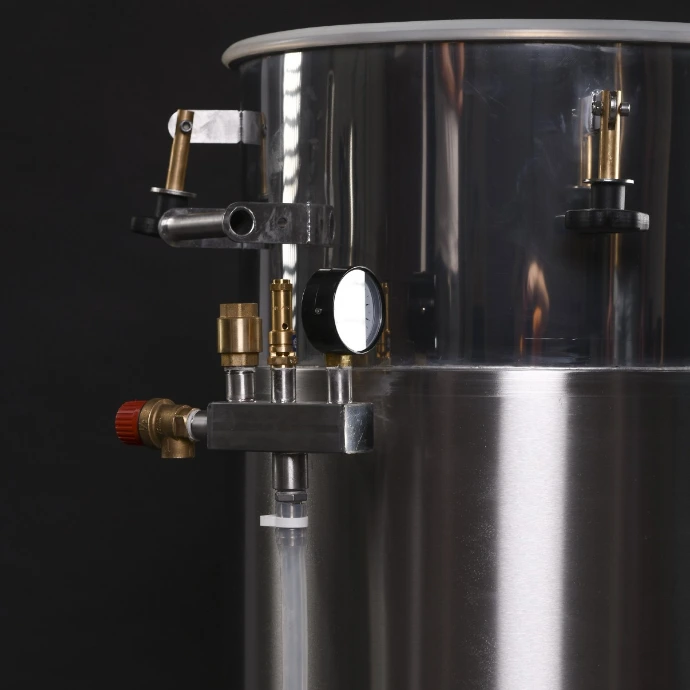
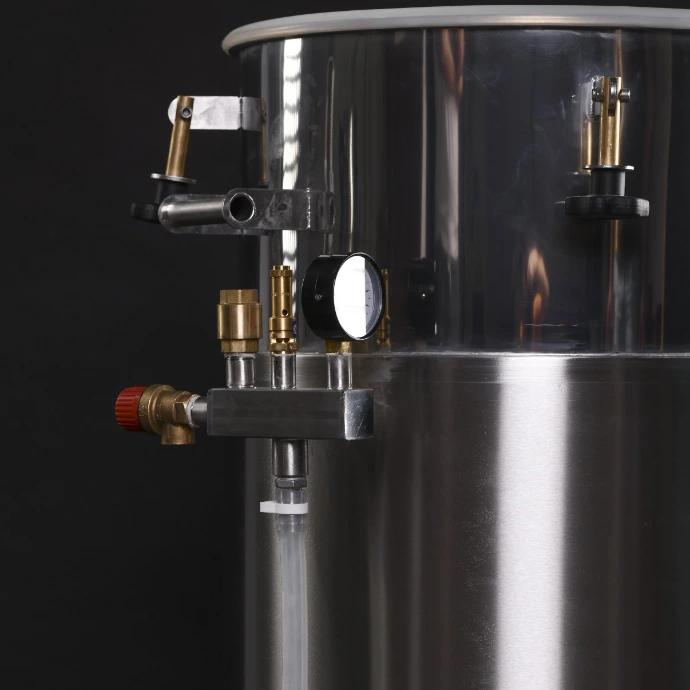
After heating and distillation have finished, the hot kettle begins to cool down. As the temperature inside the water jacket decreases, a vacuum may develop, potentially causing mechanical damage or deformation of the kettle. The vacuum relief valve equalises the pressure. As the kettle cools, air enters through the valve to compensate for the pressure difference.
Water jacket pressure gauge:
Analogue pressure gauge, 0–1 bar. It is important for operators to be able to monitor the current operating conditions of the distilling equipment at all times using the available instruments. The gauge displays the low pressure inside the water jacket, which must not exceed 0.5 bar. Rated for temperatures between 0 and 120°C, it has a significantly longer service life than models that are not designed to withstand high temperatures.
Silicone water-level indicator and filling/drain valve:
A robust, thick-walled silicone hose indicates the liquid level inside the water jacket, allowing the correct filling level to be checked. The filling and drain valve serves both functions and plays an important role, among other things, in protecting the water jacket against frost.
Fully drainable, domed inner bottom:
A common weak point in double-walled kettles is the inner jacket and bottom. Even relatively low pressure can deform large surfaces, potentially leading to cracks and structural damage over time. To prevent this, we manufacture the inner kettle from 2 mm-thick sheet metal and use a shallow-domed, pressure-resistant design. In addition, an 8 mm solid square-steel reinforcing ring is fitted around the kettle neck.
The edge of the shallow-domed bottom plate is flanged, allowing it to be joined to the kettle wall using an optimal butt weld. In accordance with stainless steel fabrication requirements, the weld is ground smooth and fully penetrated from the root side, without black burn-through marks. A fillet weld at the joint between the wall and the bottom is structurally less advantageous.
Drain pipe:
76 mm drain pipe with a ball valve for emptying the mash.
Drain ball valve:
2.5 inches, with an enlarged flow cross-section and minimal internal restriction.
Welded tubular handles:
For easy and safe transport and repositioning of the kettle, welded handles are fitted around the kettle neck. Their ergonomic design prevents them from cutting into the hands when lifting the kettle. After installation, the handles can also serve as supports for the alcoholmeter cylinder and the mash thermometer.
Brass swing bolts:
The copper dome is secured using four individually manufactured M12 bolts. The advantage of brass is that the threads are resistant to seizing, even over long periods, and are less prone to damage from repeated tightening and loosening.
Bakelite hand nuts with brass inserts:
The hand nuts press the copper dome against the gasket on the kettle neck. The Bakelite remains cool to the touch, protecting the operator from burns caused by accidental contact. The brass inserts prevent the threads from wearing out or seizing, even with frequent opening and closing.
Secure connection between the copper dome and the kettle:
The hand nuts and swing bolts allow the dome to be securely sealed with minimal effort. The number and arrangement of the fastening points are precisely designed, with the required spacing between individual pressure points carefully calculated. This ensures that dangerous overpressure cannot build up inside the kettle. Instead, only the pressure required for the correct operation of the column is generated.
Removable copper dome:
By releasing the fastening points, the copper dome and column can be removed from the kettle. This removable design is particularly practical for annual maintenance and essential when the kettle is to be used for other purposes, such as cooking jam.
3 M14 HEIGHT-ADJUSTMENT SCREWS
The levelling screws are used to align the neck of the kettle horizontally. This ensures that the distilling still stands vertically once the copper dome has been fitted, which is essential for maintaining even liquid levels in the column.
FLOOR-MOUNTABLE FOOTPLATES
The overall height of the distilling still is 237 cm. The footplates must therefore be secured to the floor during installation to ensure that the distilling still stands securely.
REMOVABLE LEG
The kettle legs are attached to the distilling kettle with bolted connections and can be removed when necessary.
HEAVY-DUTY TRIPOD CONSTRUCTION
Welded stainless steel legs made from solid, closed-section profiles and solid round steel bars ensure that the distilling still stands securely.
EQUIPOTENTIAL BONDING CONNECTION POINT
Allows connection to the equipotential bonding system and provides electrical grounding and protection against electric shock. All related work must be carried out by a qualified electrician.
SHORTENING THE LEGS WHEN CEILING HEIGHT IS LIMITED
The overall height of the distilling still is 237 cm. If the room intended for installation does not have sufficient ceiling clearance, we recommend ordering the unit with shortened legs.
Standard Version (cm) | With Shortened Legs (cm) | |
Overall height | 237 | 222 |
Height from base plate to the lower edge of the mash drain valve | 35 | 20 |
Height from base plate to the lower edge of the mash drain elbow | 29 | 14 |
FUNCTION DURING HEATING
Heat is transferred rapidly from the water jacket through the inner kettle wall because metals are good conductors of heat. However, without stirring, the heat transferred through the inner kettle wall spreads through the mash only slowly. Heat gradually moves from the kettle wall towards the centre of the mash (core temperature). Due to the resulting temperature differences within the kettle and the lack of agitation, heat accumulates near the walls, slowing down the heating process. The additional heat supplied cannot be absorbed by the mash sufficiently efficiently.
When the product inside the inner kettle is mechanically stirred, the resulting heat mixing and heat transfer (convection) ensure rapid and dynamic heating of the mash. Stirring largely equalises the temperature differences between the kettle wall and the mash.
DURING DISTILLATION
At the beginning of distillation, temperature differences develop inside the inner kettle when the mash is not stirred. The mash is hotter near the kettle wall, while the core temperature remains lower. As a result, boiling begins first directly along the kettle wall. The central part of the mash (the core) begins to boil later and less vigorously than the area near the side wall, which is partially heated by steam.
This phenomenon negatively affects the distillation process because the same compounds (e.g. heads components) are released from different areas of the mash at different times due to temperature differences. As a result, the separation points between the heads, hearts and tails become distorted, overlap and extend over a longer period. Without stirring, valuable aromatic compounds may be lost during the heads fraction, while there is also a risk that acidic tails components will enter the distillate earlier. In addition, the distillation rate is higher when the mash is mixed evenly.
The agitator can be removed by loosening a single screw, allowing it to be taken out of the kettle when necessary, for example when pasteurising jam. When the agitator is in use, the temperature distribution throughout the mash is homogeneous, and the vapour flow generated during distillation is uniform.
AGITATOR GEARMOTOR
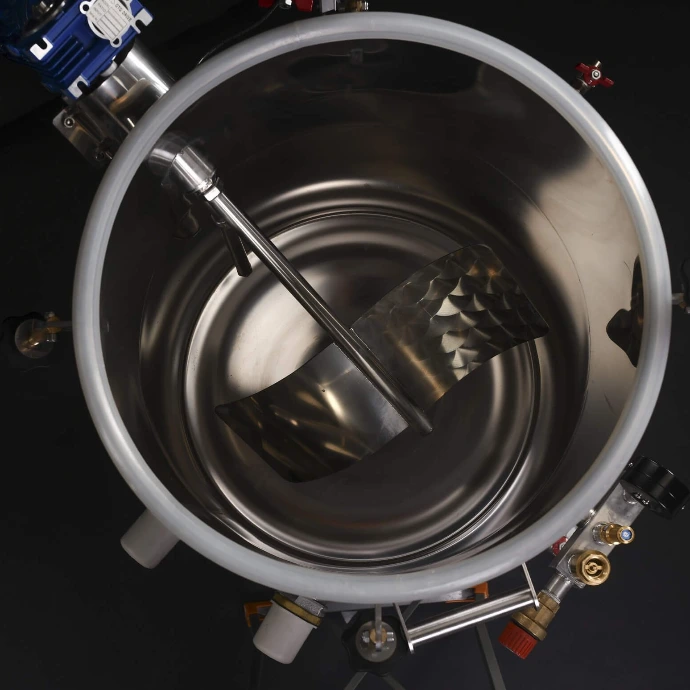
Stirring is carried out by a suitably sized, high-torque geared motor (230 V, 20–25 Nm) and a robust stirring blade.
STIRRING BLADE
A generously sized stirring blade, mounted at the appropriate angle, ensures optimal mixing and movement of the mash inside the kettle.
REMOVABLE STIRRING BLADE
The stirring blade shaft is connected to the motor drive shaft by a heavy-duty M16 bolt. This allows the blade to be detached and removed from the kettle when required.
STUFFING BOX
Rotating components are critical areas of any machine. In our design, the motor drive shaft must transmit torque through the kettle wall without allowing steam or liquid to escape while the shaft is rotating.
In addition to providing a reliable seal, the sealing material must meet food industry requirements. The rotating motor shaft is sealed using a specialised braided packing impregnated with food-grade lubricating and sealing oil.
Application:
Since the probe extends directly into the mash inside the inner kettle, the rise in mash temperature can be monitored throughout the heating phase. This makes it possible to determine when the mash is approaching its boiling point.
Current Boiling Point:
The current boiling temperature of the mash can be used to estimate how much alcohol remains in the mash, which stage of distillation has been reached, and when distillation can be stopped.
Audible Alarm:
A minimum/maximum temperature alarm can be configured. The audible signal warns when the mash approaches its boiling point (from 90°C onwards). The boiling temperature is displayed on the thermometer and can be used to estimate the alcohol content of the mash (e.g. a boiling point of 95°C at an alcohol content of 5%). When the mash temperature approaches the boiling point of water, distillation can be stopped because the remaining alcohol content is then minimal.
Beer Brewing and Grain Mash Production:
The mash thermometer can also be used to manually monitor the required temperature ranges and rest times during beer brewing and starch conversion.
Accuracy and Resolution:
The typical accuracy of the mash thermometer is ±0.5°C within the temperature range relevant to our applications. The display resolution is 0.1°C, allowing temperatures above 99°C to be read easily. In pálinka production, such temperatures indicate that distillation is nearing completion.
Update Rate:
Rapid measurement updates are also particularly important. Both the head thermometer reading and the mash thermometer reading are updated once per second.
Mounting:
The probe is mounted in the vapour space at the upper end of the column using a specially designed packing gland. The stainless steel probe can be secured by hand by tightening the knurled screw. A food-grade silicone seal ensures reliable sealing. This prevents steam from escaping during pálinka production. At the same time, the probe can be fixed precisely at the position where the temperature relevant to the process needs to be measured.
Minimum Kettle Fill Level:
25 litres (this quantity is already sufficient to reach the height of the mash thermometer probe).
Purpose: The final step of a distillation cycle is to drain the spent mash remaining in the kettle, which contains only a minimal amount of alcohol.
Safe Draining: The drain elbow, angled at 90 degrees, serves an important safety function by preventing hot spent mash from discharging in a horizontal jet when the ball valve is opened.
Connection to a Drain: For convenient operation, we recommend connecting the drain elbow directly to a drain.
Backflushing Function: Rinsing and cooling water can be connected to the drain elbow via a ½-inch ball valve.
Alcohol Content Measurement: During pálinka production, we measure the alcohol content of the distillate flowing out of the still for reference. The simplest way to measure alcohol content is to continuously direct the distillate from the outlet into an alcoholmeter cylinder.
Operating Principle: The distillate leaving the product condenser flows vertically into the tube containing the alcoholmeter. This vertical feed prevents the flow of the distillate from carrying the alcoholmeter along and lifting it significantly, which would result in a measurement error.
Alcoholmeter Supplied as an Accessory and Replacement: The alcoholmeter cylinder is supplied with a technical alcoholmeter featuring a scale from 0 to 100. An additional spare alcoholmeter is also provided.
COPPER DOME
Material Quality: Oxygen-free red copper with a copper content exceeding 99.90%.
Removable Copper Dome: By loosening the brass swing bolts attached to the upper part of the kettle, the copper dome can be completely removed, making it a separate component. On most pálinka stills, the dome is permanently attached to the kettle by welding or other means. The removable dome offers a significant advantage, as the entire inner surface of the kettle remains accessible during routine maintenance and can be cleaned easily.
Seal Between the Copper Dome and Kettle: A food-grade silicone profile is fitted around the specially manufactured rim, which matches the profile of the kettle neck. It provides a perfect seal between the nearly horizontal edge of the dome and the kettle neck.
Material Thickness: 2 mm — particularly robust for this product category.
Aroma Catalysis: Red copper contributes to the formation of new aromatic compounds during distillation. A sufficiently large copper surface area and adequate contact between the copper and the vapour are essential for obtaining an aromatic distillate.
Adsorption by Red Copper: Thanks to its surface-binding properties, red copper can bind harmful compounds present in the vapour generated during pálinka production, such as sulphur compounds and hydrocyanic acid, resulting in a purer distillate.
Robust Construction: The domed shape provides high mechanical stability. The rim is bent into an L-shaped profile and reinforced with an 8 mm-thick edge.
Structural Strength: Red copper is a soft metal, but a specialised forming process strengthens its structure, ensuring the required mechanical stability.
Clamping Ring: The rim is fitted with a clamping ring made from solid stainless steel flat bar, with welded clamping tabs. The ring is removable, and its surface is easy to clean.
Reinforcement and Column Connection Flange: A specially welded 5 mm-thick stainless steel flange is fitted around the reinforced neck section, providing additional rigidity to the red copper dome. The flange also serves as the connection point for the column.
LOADING DOOR
Purpose: Cleaning the kettle, filling it with mash and visually monitoring the process through the viewing window.
Foaming: A typical issue in pálinka production is that the mash can sometimes foam excessively. Cherry, sweet cherry and grape pomace mashes, as well as wine yeast, are particularly prone to foaming. The viewing window allows foam formation to be detected early so that the distillation process can be adjusted accordingly.
Usable Filling Hatch Diameter: 120 mm
Flanged Hatch Opening: The dome features a custom-made, flanged filling opening that is easy to clean. An 8 mm-thick stainless steel ring is welded to the flanged, ground-flat opening using a combined copper-to-stainless-steel joint. The clamping screws are secured to this ring.
Viewing Window Integrated into the Hatch: A viewing window with a clear viewing diameter of 76 mm allows visual monitoring of the boiling process inside the kettle.
Brass Swing Bolts: The hatch cover is secured with two individually manufactured M10 bolts. The advantage of brass threads is that they resist seizing over time and are less likely to be damaged by repeated tightening and loosening.
Silicone Gasket: A D-profile silicone ring fitted into a groove ensures a reliable steam-tight seal.
Ergonomic Bakelite Hand Nut with Brass Threaded Insert: The hand nuts press the hatch cover against the gasket on the kettle neck via the swing bolts. The Bakelite remains cool to the touch, protecting the operator from burns caused by accidental contact. The brass insert prevents the thread from wearing out or seizing, even after numerous opening and closing cycles.
Handle: A handle secured with a bolted connection allows the hatch to be removed safely.
The funnel is secured to the filling opening of the copper dome using the hand nuts.
The support tab rests on the flange of the filling opening and holds the funnel securely in place. This allows a bucket or barrel to rest on the designated curved section, making it easy to pour the mash into the kettle.
Material: Stainless steel
Upper Diameter: 350 mm
Lower Diameter: 92 mm
Height: 252 mm
COLUMN DIAMETER: 114 mm
MATERIAL: Food-grade stainless steel
DISMANTLABLE COLUMN SECTIONS: The entire column can be dismantled for cleaning. This is an important feature, as the distilling equipment must be cleaned regularly. Following certain distillation problems, such as excessive foaming of the mash, the internal components must be thoroughly rinsed. Greasy and oily distillation residues can accumulate inside the column. Thorough cleaning is practically impossible with tray columns whose sections cannot be dismantled (welded column sections).
MODULAR FLANGED CONNECTIONS: The individual column sections are connected by rings (flanges) secured with bolts. The flanges are 5 mm thick.
SILICONE GASKET: A food-grade silicone gasket with a sealing lip is fitted between the flanges. The sealing lip and the appropriate material hardness ensure a perfect, leak-proof seal.
SPLASH GUARD SECTION: Prevents solid particles carried upwards by the boiling mash from entering the first tray.
SIEVE TRAY COLUMN SECTION: The design consists of a perforated plate with appropriately sized and spaced holes and an overflow. The overflow determines the maximum liquid level on the tray. For the production of fruit brandies and pálinka, we recommend tray columns exclusively. Fact(!): Virtually all professional producers of fruit brandies, pálinka and other aromatic spirits use tray columns.
Some advantages of tray columns:
Stable liquid levels
Fast and efficient mass transfer through forced flow
Adjustable liquid levels
Correct operation can be monitored through the viewing windows
Problems with distillation control can also be identified through the viewing windows
Control can be adjusted to suit each distillation fraction
Individual trays can be deactivated
Continuously adjustable liquid levels
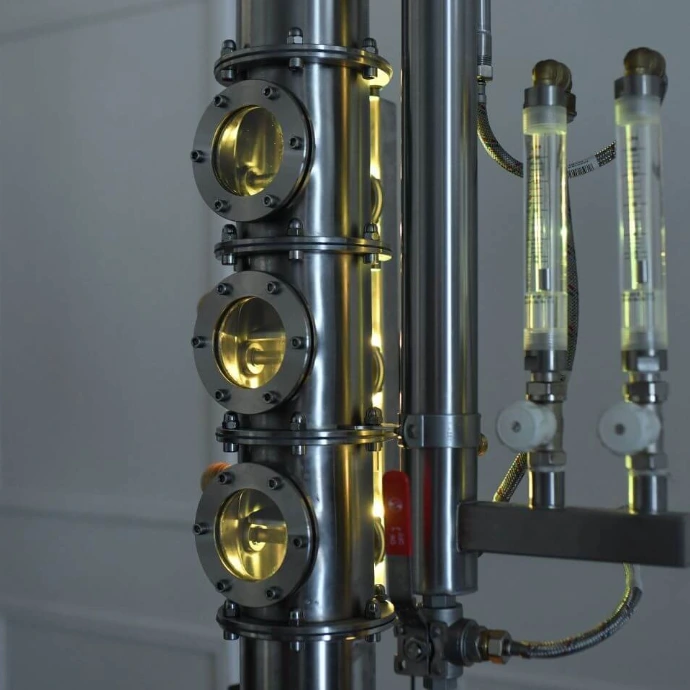
FLANGED VIEWING WINDOWS: The 76 mm viewing windows, featuring a T-piece-style design, provide a hygienic and aesthetically pleasing solution. Without viewing windows, meaningful monitoring and appropriate control of the distillation process are not possible. Food-grade, heat-resistant glass and a silicone gasket matched to the profile ensure reliable sealing at the flange connections.
What can be observed through the viewing windows:
Vapour formation at the start of distillation
Column equilibrium
Reflux rate
Liquid levels
Foam formation
Distillation vapour velocity and bubble formation
Impressive backlighting
The liquid level adjustment mechanism with a wooden handle serves the following functions during distillation:
It allows us to actively adjust the operation of the column during distillation.
The higher the liquid levels, the more strongly the column rectifies the vapour.
During heads separation: At maximum liquid levels, a small quantity of highly concentrated heads can be separated. This prevents valuable aromatic compounds from being lost due to an unnecessarily prolonged heads phase.
During the hearts phase: When collecting the first third of the hearts fraction, we can observe that, for most fruits, the majority of the valuable aromatic compounds carry over during this stage. By lowering the liquid levels or deactivating one or two trays, heavier flavour-contributing aromatic compounds can pass through into the distillate.
Before the tails phase: Towards the end of distillation, the remaining alcohol and aromatic compounds recoverable from the mash can be concentrated more effectively.
Function: The correct operation of the distillation process inside the column can be monitored through the viewing windows when the interior of the column is illuminated. An RGB LED mounted on the rear of the column illuminates the interior through viewing windows with a diameter of 25 mm. The lighting is not merely decorative. Without additional illumination, it is considerably more difficult to monitor the distillation process inside the column.
Striking Backlighting Effect: Three LEDs are positioned behind each viewing window. The central LED illuminates the interior of the column, while the light from the upper and lower LEDs is diffused by the polished surfaces of the column. This impressive lighting effect is a real eye-catcher in any distillery.
Robust Stainless Steel Cover: The custom-bent cover, attached to the column, blends harmoniously with the design of the equipment while providing reliable protection for the electronic components.
Customisable RGB LED Colour: The colour of the LED lighting can be changed across the full RGB colour spectrum.
Remote Control: The lighting can be operated using a dedicated remote control. Key functions include switching the lights on and off, adjusting brightness, custom colour mixing, and selecting the primary colours blue, green and red.
Power Supply: A 12 V power adapter is included and powers the LED panel from a 220 V mains supply. A 220 V power outlet should be provided behind the equipment for connecting the adapter.
Red copper catalyst and packing material for aroma development and adsorption (for details, see the section on the copper dome). The packing chamber contains 330 copper rings with a total surface area of nearly 1 m². One advantage is that, thanks to the column still distillation process (reflux formation: vapour–liquid–vapour), the distillate components come into contact with the red copper surface multiple times. The copper binds unwanted compounds and contributes to the formation of new flavour compounds during distillation.
Copper, in appropriate quantities, is an indispensable component of distilling and pálinka stills. In addition to the quantity of copper, it is crucial to ensure the highest possible degree of contact between the copper and the distillation vapour. One of the most effective ways to achieve this is by using red copper packing.
Shell-and-Tube Dephlegmator: An active (water-cooled) partial condenser that ensures a sufficient proportion of the vapour rising through the column condenses and returns to the liquid state. The vapour condensed in the dephlegmator flows back into the column. This returning condensate is known as reflux. The correct reflux rate and temperature activate the column trays and enable column-still distillation. For the dephlegmator to operate optimally, the following criteria must be met:
Correct Sizing: The cooling surface must be sized according to the volume of vapour flowing through the column. Undersized dephlegmators consume large amounts of water and allow too many components to pass through.
Mechanically Enforced Flow Path: The components of the distillation vapour must not be able to bypass the cooling surfaces of the dephlegmator.
Problems Caused by Oversizing: An oversized dephlegmator can cause valuable distillate components to be lost.
Precise Control Required: Even a well-engineered, high-quality dephlegmator cannot operate optimally if the coolant flow cannot be controlled precisely and there is no clear feedback on the process.
Gravity-Operated Dephlegmator: Components that cannot pass through the dephlegmator under the prevailing cooling conditions due to their physical properties are condensed. Dephlegmators positioned beside the column operate with forced reflux. The operator uses a valve to determine the proportion and quantity of distillate returned to the column. These side-mounted dephlegmators are designed for industrial rectification processes and are not recommended for the production of fruit brandies.
Operating Principle: The high-alcohol-content vapour leaving the top of the column enters the product condenser through a 1-inch union fitting. The distillate vapour condenses in the upper third of the product condenser (transitioning from vapour to liquid) and is then cooled further across the surface of the tube bundle.
Functional Objectives:
Complete condensation of the distillation vapour, without losing aromas or other components.
Cooling the condensed distillate to below 30°C to minimise evaporation losses.
Average Cooling Water Requirement: 100–150 litres per distillation, with an inlet cooling water temperature of 15–20°C.
Large-Surface-Area Tube Bundle: Ensures that the distillate is fully condensed and cooled across the surface of the tube bundle.
Energy-Efficient Countercurrent Operation: The cooling water flows countercurrent to the distillate vapour. This allows the product condenser to operate with low water consumption. Countercurrent flow is the most efficient method of heat transfer.
Sufficient Length: The product condenser has an overall length of almost 1 metre. This provides sufficient time for the condensed distillate film to cool as it flows down over the tube bundle.
Design Advantages: The large heat-transfer surface, countercurrent operation and exceptional length for this product category are key design advantages. Together, they enable low cooling water consumption while maintaining optimal cooling performance.
Complete Condensation: A disadvantage of short product condensers with small cooling surfaces is that valuable aromatic compounds may escape. We use a product condenser measuring almost 1 metre in length to achieve complete condensation, adequate distillate cooling and low water consumption.
Prevention of Copper Oxide Contamination: The condenser is made of food-grade stainless steel. Once the distillation vapour has condensed in the product condenser, contact with red copper surfaces would be undesirable, as copper contamination could enter the distillate. In larger quantities, this can cause a bluish-green discolouration known as copper break.
Analogue Thermometer for Cooling Water Outlet Temperature: The thermometer is located in the upper quarter of the product condenser and displays the temperature of the heated cooling water leaving the condenser. If the temperature is too low (below 50°C), the cooling water flow rate can be reduced using the rotameter. If the temperature is too high (above 70°C), the cooling water flow rate is insufficient. In this case, the flow rate must be increased to ensure that the distillate is adequately cooled.
Function and Operating Principle: In its standard position, the valve directs the distillate towards the outlet pipe. When the valve is turned clockwise as far as it will go, the flow path to the outlet pipe is closed. At the same time, water from the water inlet manifold enters the system and flows through the column in the opposite direction to the normal flow, fills the condenser and then enters the column via the swan neck.
Column Flushing: Drinking water of suitable quality is required to flush the column. The flushing water removes residues from the previous distillation from the inside of the column, preventing them from mixing with the first fraction of the next distillation.
CONTROL VALVES: HERZ manual straight valves allow the water flow to the dephlegmator, Pistorius tray and product condenser to be regulated. The metal conical seal and fine-thread adjustment mechanism allow precise control of the water flow rate.
FLOAT-TYPE FLOW METERS (ROTAMETERS): Precise control of the water flow rate is one of the most important requirements for correct column operation. The metal float inside each rotameter rises when the valve is opened and falls when it is closed. The current water flow rate can be read from the scale in litres per hour. Without feedback on the cooling water flow rate from rotameters or an equivalent system, neither column equilibrium nor the optimal water flow rate for the product condenser can be set. This makes proper manual control of the equipment impossible.
The pálinka still is equipped with 3 rotameters:
Dephlegmator rotameter: Essential for setting the correct reflux rate, head temperature and column equilibrium.
Product condenser rotameter: Ensures that the product condenser can achieve the functional objectives described above.
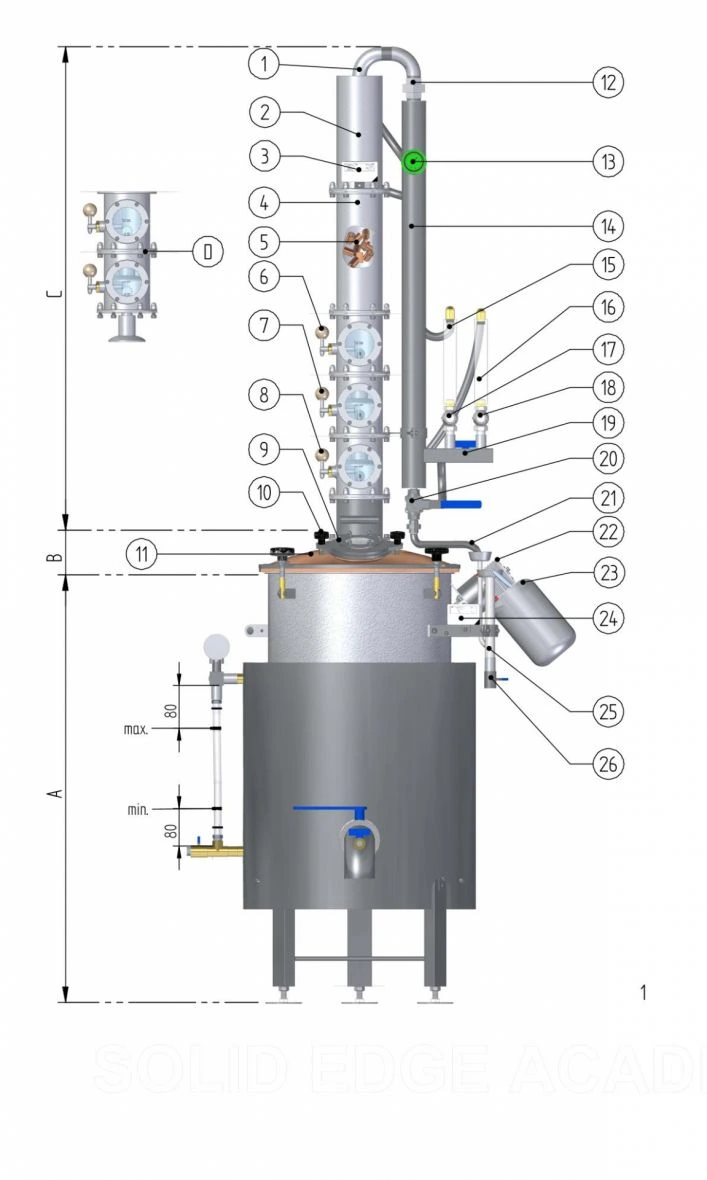
| A | Bain-Marie Water-Jacketed Kettle |
| B | Copper Dome |
| C | Rectification Column |
| D | 2 Sieve Tray T-Pieces |
| 1 | Swan Neck |
| 2 | Water-Cooled Dephlegmator |
| 3 | Digital Dephlegmator Thermometer |
| 4 | Copper Catalyst |
| 5 | Copper Packing |
| 6 | Upper Aroma Control |
| 7 | Middle Aroma Control |
| 8 | Lower Aroma Control |
| 9 | Filling Hatch with Viewing Window |
| 10 | Hand Nut with Swing Bolt |
| 11 | Copper Dome |
| 12 | 1-Inch Union Fitting |
| 13 | Analogue Product Condenser Thermometer |
| 14 | Shell-and-Tube Condenser |
| 15 | Dephlegmator Flow Meter |
| 16 | Product Condenser Flow Meter |
| 17 | Dephlegmator Flow Meter Control Valve |
| 18 | Product Condenser Flow Meter Control Valve |
| 19 | Cooling Water Collector and Manifold |
| 20 | 3-Way Backflush Valve |
| 21 | Distillate Outlet |
| 22 | Drive Unit |
| 23 | Electric Agitator Motor |
| 24 | Digital Mash Thermometer |
| 25 | Alcoholmeter Cylinder |
| 26 | Alcoholmeter Bypass Valve |
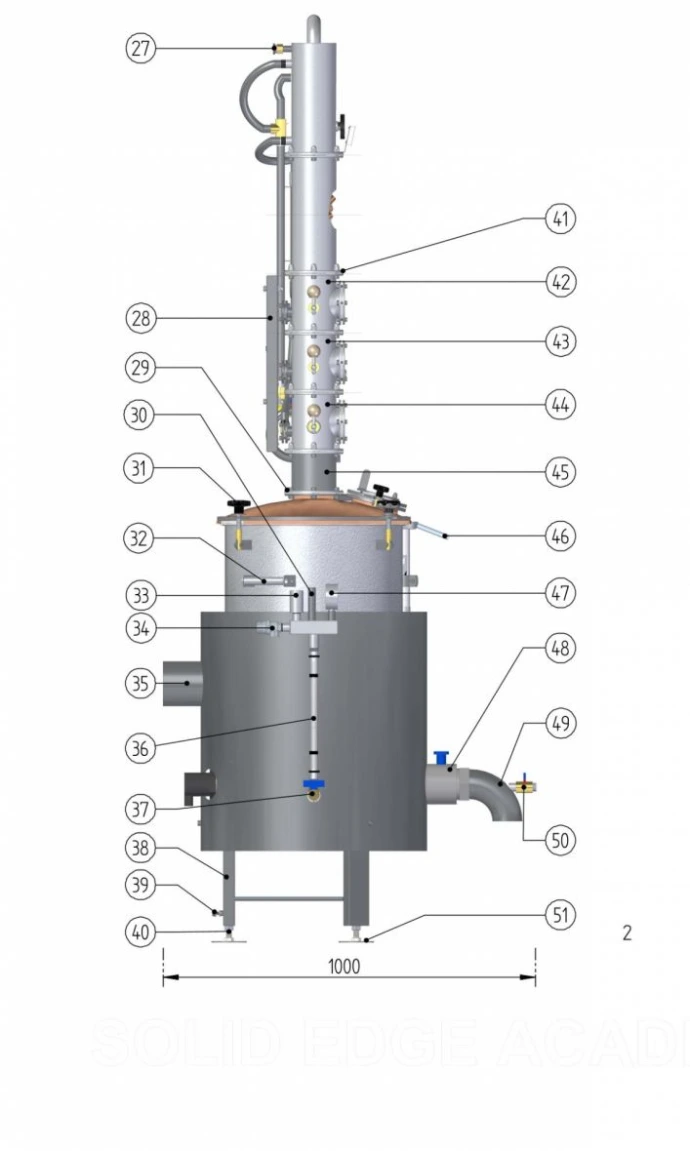
| 27 | Head Thermometer Probe Connection |
| 28 | LED Lighting Panel |
| 29 | Removable Flange for Column and Copper Dome |
| 30 | 0.5 Bar Safety Valve |
| 31 | Copper Dome Hand Nut |
| 32 | Lifting Handle |
| 33 | Vacuum Relief Valve |
| 34 | Safety Relief Valve |
| 35 | Kettle Outlet Nozzle |
| 36 | Dip Tube for the Bain-Marie System |
| 37 | Water Inlet/Outlet Valve |
| 38 | Kettle Leg |
| 39 | Grounding Connection |
| 40 | Levelling Screw |
| 41 | Removable Flange for Copper Catalyst |
| 42 | Upper Sieve Tray with Viewing Window |
| 43 | Middle Sieve Tray with Viewing Window |
| 44 | Lower Sieve Tray with Viewing Window |
| 45 | Splash Guard T-Piece |
| 46 | Alcoholmeter Cylinder Outlet |
| 47 | Heat-Resistant Pressure Gauge, 0–1 Bar |
| 48 | 2.5-Inch Drain Valve |
| 49 | 76 mm Mash Outlet |
| 50 | Backflush Valve |
| 51 | Floor-Mountable Feet |
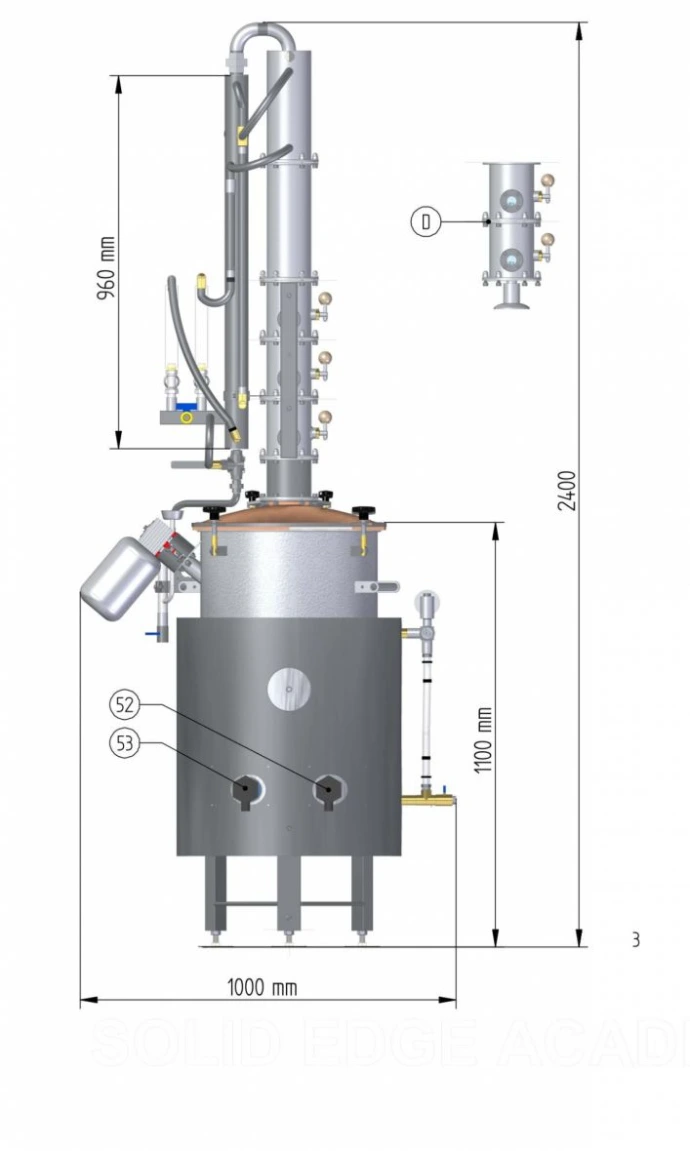
| 52 | Right Electric Heating Element |
| 53 | Left Electric Heating Element |
| D | 2 Sieve Tray T-Pieces |
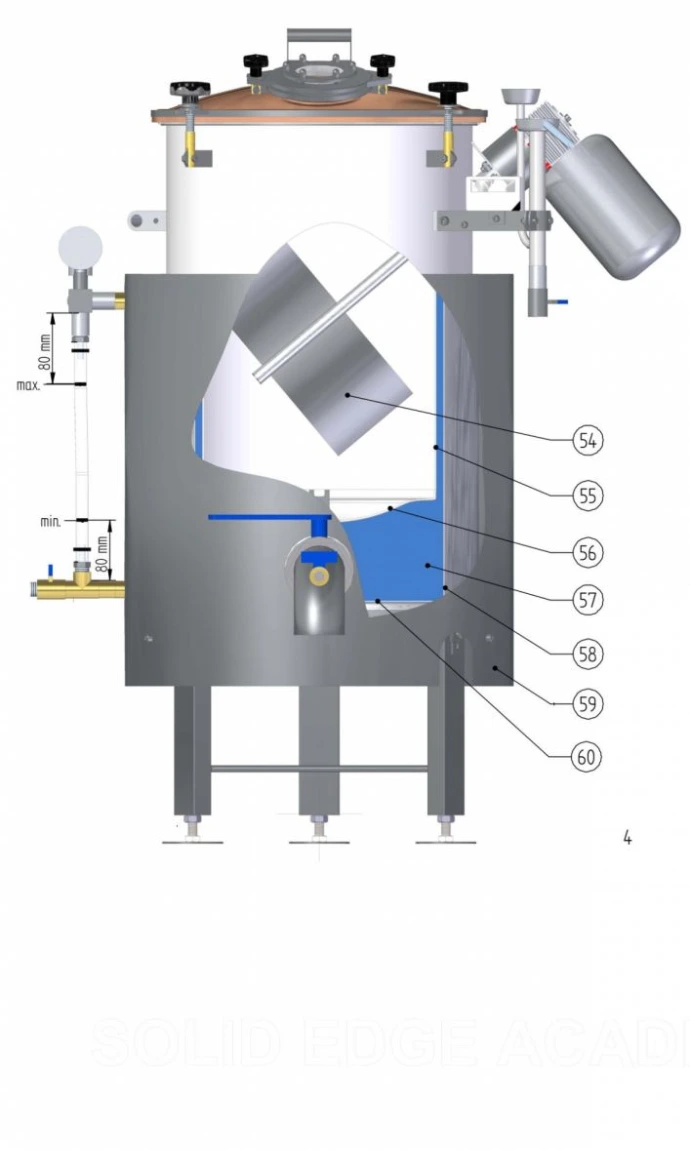
| 54 | Stirring Blade |
| 55 | Inner Kettle Wall |
| 56 | Embossed Inner Bottom Plate |
| 57 | Water Flow Path of the Inner Kettle |
| 58 | Outer Kettle Wall |
| 59 | Outer Jacket of the Gas-Heated Kettle |
| 60 | Outer Bottom Plate |
WE HELP YOU MAKE THE RIGHT CHOICE
Decision-Making Guide
State-of-the-Art Technology: Most of the leading commercial pálinka distilleries use column still distillation. This is no coincidence. Column stills offer outstanding advantages in terms of energy efficiency, process control, alcohol yield, maximum aroma extraction and the preservation of primary fruit aromas.
Fast Distillation: Since the distillation only needs to be carried out once to achieve the desired technical objectives, considerable time can be saved compared with traditional double distillation. With sufficient heating power, distillation of an average mash (e.g. apple or pear) typically takes around 2 hours: approximately one hour for heating and one hour for distillation.
Higher Technical and Design Requirements:
If a distilling still equipped with a rectification column does not have the control valves and components required to regulate the distillation process, the desired distillation results cannot be fully achieved.
Over-Rectification: A column still used for pálinka production must be regulated differently depending on the stage of distillation. If the equipment cannot be adjusted to suit the current stage, maximum aroma extraction becomes more difficult to achieve, and valuable aromatic compounds may be missing from the finished pálinka. Most column stills are suitable only for concentrating alcohol and, due to design and control limitations, cannot fully achieve the goal of maximum aroma extraction. We therefore strongly recommend a tray column (sieve-tray or bubble-cap tray column) with an adjustable liquid level and a suitably sized, adjustable dephlegmator.
Aroma Loss: This can occur when a column still is poorly designed, as described above. A well-designed column still, correctly operated by the user, can produce distillates of exceptionally high quality.
Minimal Aroma Losses: Since the mash only needs to be heated once during column still distillation, fewer delicate aromatic compounds are affected by thermal degradation or lost during the process. This contributes to the growing popularity of aromatic column-still distillates rich in primary fruit aromas.
Higher Initial Investment: A well-designed distilling still with suitable control technology and a comprehensive range of functions is generally more expensive than a comparable traditional copper pot still intended for double distillation. However, it is important to compare the technical specifications of the equipment directly. Traditional double distillation ideally requires two kettles: one for the first distillation (stripping run) and another for the second distillation (spirit run). Each must be designed for its respective distillation process. Under these circumstances, a column still can already offer a price advantage.
Ease of Use and Operation: This applies only to column stills that have been designed appropriately.
Several distillation techniques can be explored. The distillation method can be tailored to the specific fruit, allowing different approaches to pálinka production to be tested.
Column Still Distillation: One charge, one heating cycle and one distillation run.
First Run of Double Distillation (Mash Distillation): The first distillation follows the traditional copper pot still method, with the dephlegmator not in use, until low wines (raw distillate) are obtained.
Traditional Second Distillation: The low wines obtained can be distilled using the traditional copper pot still method, with the dephlegmator and trays deactivated.
Combined Second Distillation: The low wines obtained can also be distilled using the dephlegmator at reduced output.
The foundation of column still distillation is a correctly sized tray and dephlegmator, selected for the intended application, together with precise control over these components. Mass transfer takes place on every tray. Vapour rich in more volatile components (heads, alcohol and aromas) rises upwards, while heavier components (water and tails components) condense and flow back into the lower sections of the column or into the kettle. Each tray effectively represents a separate distillation.
Distillation Cycle: Operating Sequence for Column Still Pálinka Production
Filling: Add a maximum of 80 litres of mash and anti-foaming oil.
Switching on the Agitator: Ensures rapid heating and uniform distillation.
Heating Phase: The mash is typically heated from its initial temperature to 90–95°C at maximum heating output. The end of the heating phase can be monitored using the mash thermometer.
Boiling Point: Active boiling is initiated by reducing the heating output.
Column Equilibrium: Precise control of the heating output and the dephlegmator rotameter help maintain correct column operation. Electric heating is recommended.
Heads Fraction: The cooling water flow rate is gradually reduced using the control valve and rotameter while monitoring the response of the head thermometer.
Hearts Fraction: The hearts fraction is collected with consistent dephlegmator cooling and constant heating output.
End of Distillation: The tails fraction is generally not collected. The end of distillation is indicated by the precise mash thermometer and changes in the sensory characteristics of the distillate flowing from the outlet.
Backflushing: Once distillation is complete, switch off the heating and loosen the filling hatch before beginning to flush the product condenser and the entire column.
Diluting and Cooling the Mash: Cooling and dilution water can be added through the filling hatch. The agitator should remain switched on during this stage, as it helps ensure that the kettle can be emptied evenly.
Emptying: Open the ball valve to drain the spent mash remaining in the kettle. The kettle can be rinsed with a jet of water through the filling hatch. Wherever possible, the contents should be drained directly into a suitable drain, while using the backflushing function of the drain elbow at the same time.
Operating a column still can be learned within 3–5 distillation runs and is no more complicated than operating a traditional copper pot still.
We support the learning process through all available channels.
Showroom
When collecting the equipment in person, we explain the functions of the individual components.
Operating Manual
We provide a detailed operating manual for the distilling equipment, covering:
Installation and assembly of the equipment
Cleaning run and thorough cleaning of the components
Components and their functions
Step-by-step distillation process
Video Materials
Demonstration Distillation
We regularly conduct demonstration distillations using our column still in the spirits production laboratory at the Budapest campus of Szent István University.
On-Site Training
After the purchased pálinka still has been installed, personal on-site training is also available.
Telephone Support
Should any further questions arise during distillation, we are happy to provide assistance through our customer service hotline.
Distillation Demonstration
Using our column still, we regularly conduct demonstration distillations at the spirits production laboratory on the Budapest campus of the Hungarian University of Agriculture and Life Sciences.
Our prospective customers generally fall into two main groups:
Those who want to familiarise themselves with the operation of the distilling equipment before purchasing, enabling them to make an informed decision.
Those who have already purchased the equipment and want to take part in a supervised distillation session to learn how to operate it correctly.
On-Site Training
The equipment is collected by the owner or delivered by us via courier.
Once the connections and installation have been completed, we visit the site at a previously agreed time.
At the location provided by the owner, we carry out the first distillation together using their own mash.
We explain the theory and practical application of column still distillation.
We discuss the correct preparation and handling of the mash.
We share technical tips and practical experience to help the owner produce high-quality pálinka easily and efficiently.
With the knowledge gained during the first distillation, the owner can immediately begin operating the equipment independently and confidently, with a sound understanding of the key technical principles and processes involved in distillation.
Price: Quotation on request
Essential Design Features of a Professional Column Still:
A well-controlled kettle with low thermal inertia
A column section with at least 3 trays
The ability to adjust liquid levels in the column sections
A properly sized, water-cooled dephlegmator (air cooling is not sufficient)
Gravity-driven reflux return (no forced reflux)
Common Design Flaws in Column Stills and Their Consequences:
| DESIGN FLAW | CONSEQUENCE |
|---|---|
| A column consisting of only a dephlegmator and a Pistorius tray | Insufficient mass transfer and separation take place. The boundaries between the heads, hearts and tails fractions become blurred. The fractions cannot be clearly separated, resulting in distillates containing both heads and tails components. Multiple water-cooling stages are difficult to regulate. |
| A dephlegmator positioned beside the column | The separation of heads, hearts and tails becomes compromised. Separation is not based on the volatility of the individual components, but on mechanically forced reflux controlled by a valve. Excessive rectification can occur due to the “cold” reflux. The system is difficult to regulate and, in practice, operates almost blindly. |
| An oil-bath kettle used for column still distillation | High thermal inertia makes precise control difficult and frequently causes the column to flood. Dynamic heating can also cause the mash to scorch frequently. |
| Low heating output (4–6 kW per 100 litres) | The distillation process is slower than with a traditional copper pot still. |
| Missing control valves and process indicators | The equipment is unusable for its intended purpose. |
| An incorrectly designed or inadequately sized dephlegmator | The equipment is unusable for its intended purpose because stable column equilibrium cannot be achieved. |
CASE STUDY
Distillation Experiences
| Mash | Apricot |
|---|---|
| Mash Volume | 80 litres |
| Undiluted Distillate | 4.8 litres at 84% ABV |
| Diluted Distillate | 8.064 litres at 50% ABV from 80 litres of mash (10.08 litres from 100 litres of mash) |
| Heating time from a cold kettle | 45–50 minutes | 65–70 minutes | 105 minutes |
| Heads separation | 10 minutes | 10 minutes | 10 minutes |
| Hearts distillation time | 60 minutes | 60 minutes | 60 minutes |
| Total operating time | 2 hours | 2 hours 20 minutes | 2 hours 55 minutes |
| First 3 litres | 8–12 minutes per litre |
| 4th litre | 14 minutes per litre |
| Final stage of distillation | 8 minutes per litre |
| Electricity Consumption | 19 kW per distillation | 21 kW per distillation | — |
| Gas Consumption | — | — | 3.5 kg |
| Calculated Energy Price | €0.13/kW | €0.13/kW | €2.90 per 11 kg gas cylinder |
| Energy Costs | €2.45 | €2.70 | €4.10 |
| Dephlegmator Water Consumption | 110 litres | 110 litres | 110 litres |
| Product Condenser Water Consumption | 30 litres | 30 litres | 30 litres |
| Total Water Consumption per Cycle | 140 litres | 140 litres | 140 litres |
| Cooling Water Cost | €2.25 / m³ | €2.25 / m³ | €2.25 / m³ |
| Water Consumption Cost per Cycle | €0.31 | €0.31 | €0.31 |
| Total Costs | €2.77 | €3.00 | €4.40 |
| Cost per Litre of Distillate (50% ABV) | €0.34 | €0.37 | €0.55 |
| Parameter | Vodka / Whisky | Fruit Brandy | Gin |
|---|---|---|---|
| Mash Type | Grain mash | Plum mash | Alcohol + herbs and spices |
| Filling Volume | 80 litres | 80 litres | 80 litres |
| Alcohol Content of the Mash | 14% | 6% | 40% |
| Distillation Time | 3–4 hours | 2 hours | 6–7 hours |
| Production per Distillation | 22.4 litres (40% ABV) | 9.6 litres (40% ABV) | 72 litres (40% ABV) |
| Daily Production | 62.7 litres (3 distillations) | 38.4 litres (4 distillations) | 72 litres (1 distillation) |
| Weekly Production | 336 litres | 192 litres | 360 litres |
| Monthly Production | 1,411 litres | 806 litres | 1,512 litres |
| Annual Production | 16,934 litres | 9,676 litres | 18,144 litres |
| Cost per Distillation | €3.86 | €2.77 | €4.54 |
| Cost per Litre of Spirit | €0.17 | €0.29 | €0.06 |
MORE IMAGES
Gallery
Karakter Distillery
SLOVENIA
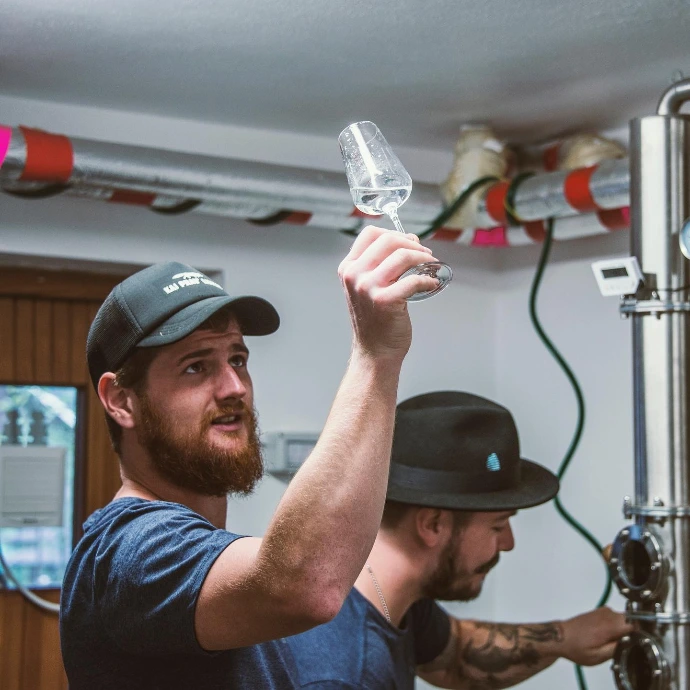
Karakter Distillery is an artisan gin distillery in Bohinjska Bistrica, Slovenia. It is one of our reference customers, producing premium gins using Patina Works distilling equipment.

Faer Isles Distillery
FAROE ISLANDS
Faer Isles Distillery is the first whisky distillery in the Faroe Islands. It produces premium whisky, gin and other craft spirits from local ingredients in a unique Nordic environment.
Cuatro Gatos
PARAGUAY
Cuatro Gatos is a Paraguayan craft distillery that produces high-quality fruit brandies, vodka, gin and liqueurs exclusively from local, natural ingredients. The distillery specialises in traditional copper pot distillation and the production of premium craft spirits.
Saint Amans
FRANCE
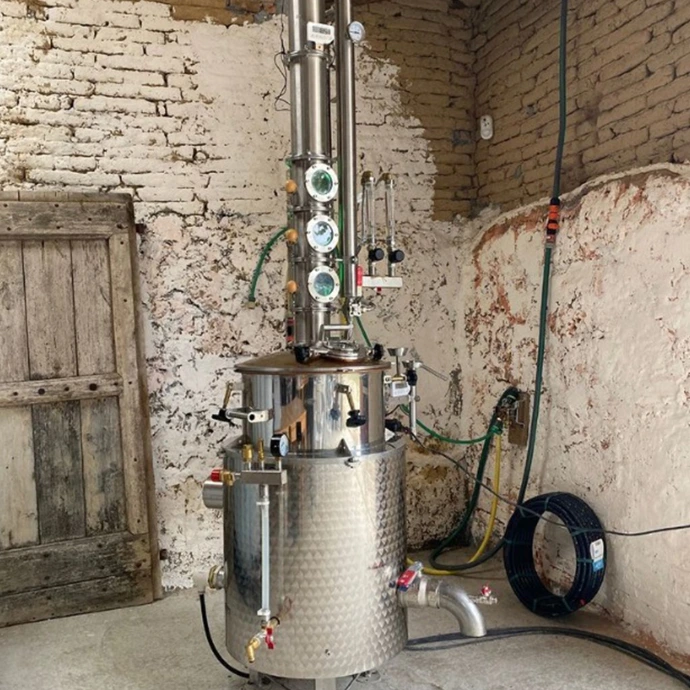
Saint Amans is a French craft distillery where traditional distillation meets local ingredients. Its products combine French elegance with distinctive flavour profiles, offering a unique experience in every bottle.
Schnapps Idea
AUSTRALIA
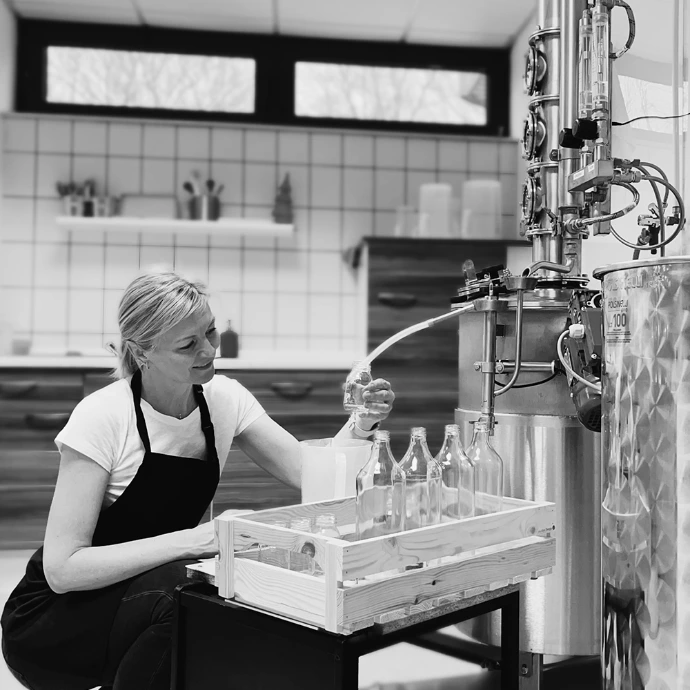
Schnapps Idea is a craft distillery in the Melbourne region that produces high-quality schnapps and fruit brandies using traditional German methods. It works with local ingredients in small batches and offers specialities including pear, apple and herbal spirits.
Södra Maltfabriken
SWEDEN
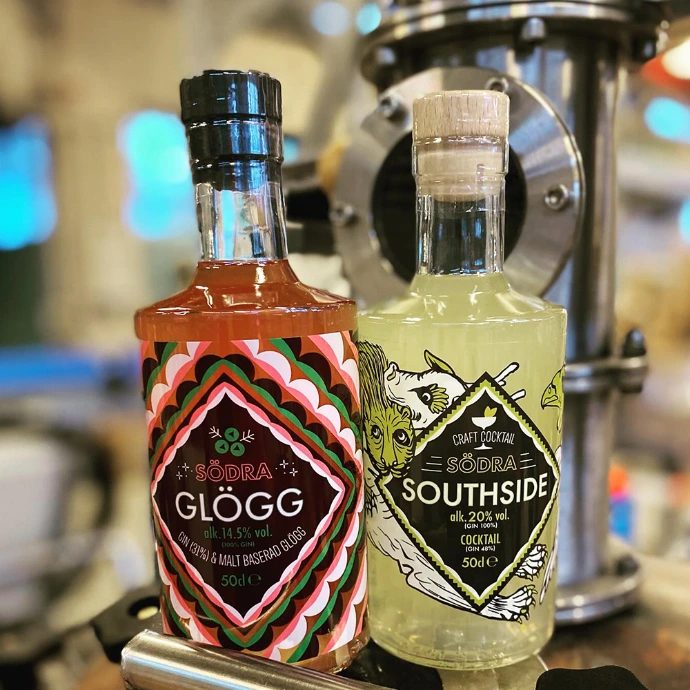
Södra Maltfabriken is a Swedish microbrewery and distillery founded in 2011 in Handen, near Stockholm. Using a creative, artisanal approach, it produces beer and other beverages, with a particular focus on quality and distinctive flavours. The company quickly became known for its high-quality craft products.
La Destileíra de Malaga
SPAIN
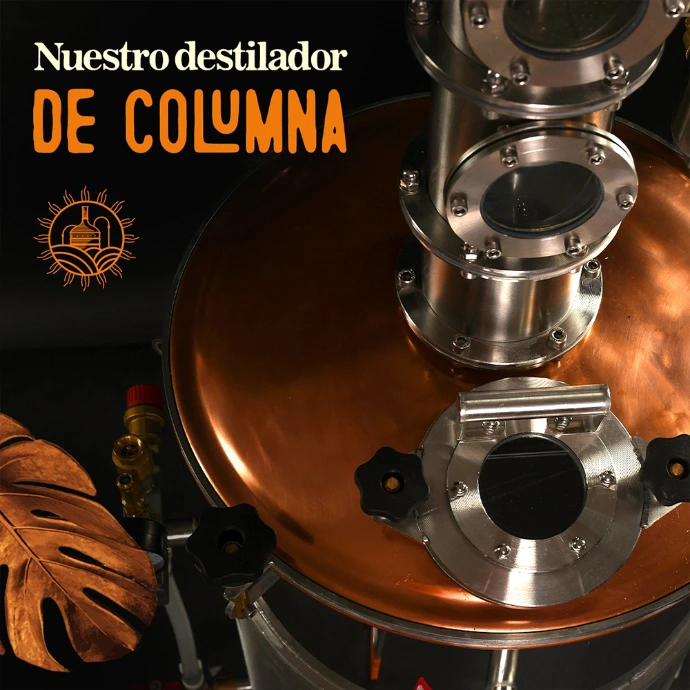
La Destilería de Málaga is a Spanish craft distillery where Mediterranean ingredients meet traditional distillation. Its products are distinguished by intense aromas, a sun-ripened character and a unique flavour profile in every bottle.

Der Luchs
GERMANY
DER LUCHS® represents not only the return of a remarkable animal species to our native forests, but also a return to mindful, discerning enjoyment through premium spirits made from carefully selected, flavourful ingredients.